
Article
Longevity Clinic Skin Protocols: Building an Evidence-Based Program
For clinic owners and medical directors. How to assess skin aging meaningfully, combine procedures with homecare, validate meso and microneedle products before use, and talk to patients without overclaiming.

A longevity clinic is a medical or wellness clinic that aims to measure and slow biological aging, tracking each patient's health with tests and data over time. A longevity clinic sells a promise of measurement: patients come because they want their health tracked and improved with data, and many expect the same approach for their skin. That creates an opportunity for clinics that already offer aesthetic procedures. It also creates a risk: a skin program built on marketing claims rather than evidence weakens the credibility of the whole clinic.
This guide is written for clinic owners and medical directors in longevity medicine and in aesthetic clinics adding a longevity program. It covers what can and cannot be measured meaningfully in a clinic, how to combine in-clinic procedures with homecare, why meso and microneedle products should be validated on ex vivo human skin before use, how clinic-exclusive longevity skincare can be co-developed, and how to talk to patients without overclaiming.
It is a framework for building a program, not advice on individual patients. Clinical decisions remain with the physician responsible for each patient.
What should a longevity clinic skin protocol do?
A longevity clinic skin protocol should do four things: record a baseline with measures reliable enough to repeat, select procedures and products whose evidence matches how they will be used, combine in-clinic sessions with homecare that works on the same biology between visits, and re-measure at a fixed interval so results can be reviewed honestly.
A protocol is a repeatable plan, not a menu of procedures. For the word "longevity" to mean something in skin, the protocol also needs a scientific frame. A 2025 framework for longevity cosmeceuticals proposes that products should target established hallmarks of skin aging, extend "skinspan" (skin viability, structure and function over time), and be validated in clinical trials, preferably with post-trial skin biopsies for aging biomarkers, together with a safety assessment.[1] Clinics can apply the same three tests when deciding what belongs in a protocol.
What can a longevity clinic measure meaningfully in skin?
A longevity clinic can measure skin dependably with standardized photography, hydration and transepidermal water loss, elasticity, colorimetry and high-frequency ultrasound, while blood or saliva epigenetic age tests and blood telomere length need careful interpretation because they do not measure facial skin and validation standards are still developing.
Clinics have more measurement tools than ever, and they are not equally meaningful for one patient over a few months. The table separates measures that are dependable in routine practice from those that need careful interpretation.
| Measure | What it tells you | Limits in clinic use |
|---|---|---|
| Standardized photography (fixed lighting, angle and distance) | Visible change in wrinkles, tone and texture over time | Only as good as the standardization; lighting changes can mimic results |
| Hydration (capacitance) and transepidermal water loss | Stratum corneum hydration and barrier function | Sensitive to room climate, season and recent product use; patients need time to acclimatize |
| Elasticity (suction-based devices) | Firmness and recovery of the skin | Site-specific; small changes can sit within measurement noise |
| Colorimetry and pigment imaging | Melanin and redness indices | Affected by sun exposure between visits |
| High-frequency ultrasound | Dermal thickness and density | Operator-dependent; requires consistent measurement sites |
| Questionnaires | Patient-perceived skin quality | Subjective; most useful alongside instrumental data |
| Blood or saliva epigenetic age tests | An estimate of biological age from DNA methylation | Not specific to facial skin; methods differ between providers; validation standards still developing |
| Telomere length in blood | A marker of cellular aging studied mainly at population level | Assays differ; changes over a few months are hard to interpret for one person |
| Skin biopsy biomarkers | Senescence, collagen, inflammation and methylation in the skin itself | Invasive; suited to a formal study with ethics approval rather than routine care |
Epigenetic clocks are a real scientific tool. The skin and blood clock, for example, was developed to estimate DNA methylation age in fibroblasts, keratinocytes, skin, blood and saliva samples.[3] The challenge in a clinic is interpretation.
A 2023 consensus paper in Cell noted that the field still lacks standards and agreement on what makes an aging biomarker reliable, and proposed validation steps.[2] A clinic that reports biological age should explain what the test measures, which tissue was sampled and how much results can vary, and should not present a single change as proof that a skin protocol worked. The guide to aging biomarkers, telomeres and epigenetic clocks covers the methods in more detail.
How should in-clinic procedures and homecare work together?
In a skin longevity protocol, in-clinic procedures such as microneedling, energy-based devices, peels and injectables deliver a controlled stimulus every few weeks, and homecare should support the same biology every day in between: collagen and hyaluronic acid, lower inflammation, and protection against UV, blue light and pollution stress.
Procedures and homecare belong in one plan, and the link between the two is closer than it looks. Microneedling creates small channels in the skin and is used to increase the absorption of topical products, growth factors and other agents.[4] That is useful, and it also means anything applied during or right after the procedure reaches layers it would not normally reach.
A systematic review of granulomatous reactions after microneedling found that motorized pens and topical vitamin C application were implicated in most of the reported cases.[5] Such reactions are rare. They still show why products used with procedures deserve their own safety review.
Practical rules many medical directors adopt:
- Use only products intended, and tested, for application on needled or freshly resurfaced skin during and immediately after procedures.
- Separate potentially irritating homecare actives from the post-procedure window unless there are data for combined use.
- Record which products were used at each session so that outcomes can be linked to inputs.
- Re-measure with the same instruments, at the same sites, at a fixed interval such as 12 weeks.
Why validate mesotherapy and microneedle products on ex vivo skin?
Mesotherapy and microneedle products should be validated on ex vivo human skin because controlled evidence for many meso cocktails is thin and needling carries products into deeper layers. Ex vivo human skin keeps the native structure, resident cells and dermal matrix, so it shows how real tissue responds before patients receive the product.[8]
Mesotherapy is popular in aesthetic clinics, but controlled evidence for many cocktails is thin. In one study, ten subjects received four sessions of a multivitamin and hyaluronic acid solution, and neither photographs nor light-microscopy examination of skin biopsies showed significant change.[6] A second small study of periorbital mesotherapy, with six sessions over three months in six volunteers, found no statistically significant histological change or clinical improvement.[7]
These studies tested specific formulas in small groups, so they do not show that every meso product fails. They do show that a product label is not evidence.
Ex vivo human skin offers a way to check a product before it reaches patients. Skin explants keep the native structure, resident cells and dermal matrix, so they show how real tissue responds.[8] KronoLife's testing menu includes microneedle and meso efficacy and safety studies on ex vivo human skin. Timing depends on the markers chosen and is set out in the project quotation. Typical endpoints include:
- Safety: skin viability by MTT and LDH and cumulative irritation by LDH.
- Matrix: collagen I by ELISA, collagen I, III, IV and V by staining, and hyaluronic acid.
- Inflammation: IL-6, IL-8, GDF-15, TNF-α and MMP-1.
- Aging biology: senolytic activity, telomere length by qPCR and a DNA methylation array.
- Benchmarking: comparison with retinol, vitamin C, resveratrol or the product the clinic already uses.
KronoLife designs and manages these studies, working with partner laboratories in Thailand. Studies should be planned before a new procedure is launched. The ex vivo skin testing page lists the full menu.
- Define the use Procedure, depth, dose, frequency and the claim the clinic wants to make.
- Safety screen Skin viability and irritation on ex vivo human skin under procedure-like exposure.
- Efficacy markers Collagen, hyaluronic acid, inflammation or senescence markers matched to the claim.
- Benchmark Comparison against the clinic's current product or a known reference.
- Introduce with measures Add the product to the protocol with baseline and follow-up measurements.
- Review Compare outcomes and adverse events with the ex vivo results before wider use.
How can a clinic co-develop an exclusive longevity skincare line?
A clinic can co-develop an exclusive longevity skincare line by starting from tested actives, designing the formula around the procedures the clinic offers, writing claims to match the data, and testing the finished formula on ex vivo human skin, including under procedure-like exposure, before it reaches patients.
Homecare is where many clinics lose control of the protocol. Patients buy whatever is on promotion, and the clinic's scientific positioning stops at the door. A longevity skincare line co-developed exclusively for the clinic closes that gap. The formula is designed around the procedures the clinic offers, the actives come with evidence, and the claims are written to match the data.
Co-development usually starts from tested actives. KronoLife's portfolio includes the senolytic ZenoLase and the senomorphic ReverZase for topical use, and the oral actives DionySenz and KronoZase. In ex vivo adult human skin, ZenoLase increased collagen by 94% and hyaluronic acid by 484% versus control and reduced age-related inflammation by 40 to 55%; in clinical testing it was non-irritating and non-sensitizing (KronoLife internal data). The finished formula can then be tested on ex vivo skin, including under procedure-like exposure, before it reaches patients.
This answers a common question from medical directors: how to give homecare the same evidence standard as the procedures. The answer is to build the evidence into the product brief from the start. The KronoLife partner page outlines how co-development projects are scoped, and the briefing on the longevity skincare market sets out where demand is moving.
Patient communication without overclaiming
A longevity clinic should talk to patients by naming what was measured and in which model, separating results measured in the patient from results shown in laboratory models, and keeping cosmetic statements apart from medical statements, which belong to the physician. Clear, modest language builds more trust than bold claims.
Longevity medicine attracts patients who read research and ask hard questions. Modest language also keeps cosmetic products away from disease claims.
| Avoid | Use instead |
|---|---|
| "This serum reverses your skin age." | "In ex vivo human skin, the active in this serum reduced markers of cellular senescence." |
| "Your biological age dropped by three years." | "Your test result changed between visits. This test measures blood, not skin, and results can vary." |
| "It clears all your senescent cells." | "It contains an active that reduced senescent cells in laboratory skin models." |
| "It prevents age-related disease." | Remove. Cosmetic products should make no disease claims. |
| "Clinically proven anti-aging." | Name the study, its duration and the measured outcomes, for example hydration and elasticity at 14 days. |
| "Results for everyone." | "Results vary between people. We measure yours at baseline and again at 12 weeks." |
Three principles sit behind the table. Name what was measured and in which model. Separate what the clinic measured in the patient from what was shown in laboratory models. Keep cosmetic statements and medical statements apart, and leave medical statements to the physician.
FAQ
Can a clinic use biological age tests to show that a skin protocol works?
No, not on their own. Most consumer epigenetic tests use blood or saliva, not facial skin, and standards for validating aging biomarkers are still developing. Instrumental skin measures and standardized photography are more dependable for tracking a skin protocol.
Why test a meso product on ex vivo skin if it is already sold for clinic use?
Because a product being sold for clinic use is not evidence that it works. Small clinical studies of some mesotherapy cocktails, with skin biopsies, found no significant clinical or histological change. An ex vivo study shows whether a specific product affects collagen, hyaluronic acid or inflammation markers in human skin, and whether it is tolerated, before patients receive it.
How long does an ex vivo validation study take?
It depends on the markers and models chosen. The timing for each study is confirmed in the project quotation, so plan the study before a new procedure is launched.
Can supplements be part of a skin longevity protocol?
Yes, if they have skin-relevant evidence. Supplements can be tested on ex vivo human skin using systemic-style exposure. KronoLife's oral senolytic active DionySenz, for example, improved skin hydration and radiance after 10 days of oral intake in a clinical study, with no side effects reported (KronoLife internal data).
References
- Klinngam W, Chaiwichien A, Osotprasit S, Ruktanonchai U, Kanlayavattanakul M, Lourith N, Wongrakpanich A, Teeranachaideekul V, Iempridee T. Longevity cosmeceuticals as the next frontier in cosmetic innovation: a scientific framework for substantiating product claims. Front Aging. 2025;6:1586999. doi:10.3389/fragi.2025.1586999
- Moqri M, Herzog C, Poganik JR, et al. Biomarkers of aging for the identification and evaluation of longevity interventions. Cell. 2023;186(18):3758-3775. doi:10.1016/j.cell.2023.08.003
- Horvath S, Oshima J, Martin GM, et al. Epigenetic clock for skin and blood cells applied to Hutchinson Gilford Progeria Syndrome and ex vivo studies. Aging (Albany NY). 2018;10(7):1758-1775. doi:10.18632/aging.101508
- Spataro EA, Dierks K, Carniol PJ. Microneedling-associated procedures to enhance facial rejuvenation. Clin Plast Surg. 2023;50(3):479-488. doi:10.1016/j.cps.2022.12.012
- Friedmann DP, Mehta E, Verma KK, Harris R. Granulomatous reactions from microneedling: a systematic review of the literature. Dermatol Surg. 2025;51(3):263-266. doi:10.1097/DSS.0000000000004450
- Amin SP, Phelps RG, Goldberg DJ. Mesotherapy for facial skin rejuvenation: a clinical, histologic, and electron microscopic evaluation. Dermatol Surg. 2006;32(12):1467-1472. doi:10.1111/j.1524-4725.2006.32353.x
- El-Domyati M, El-Ammawi TS, Moawad O, El-Fakahany H, Medhat W, Mahoney MG, Uitto J. Efficacy of mesotherapy in facial rejuvenation: a histological and immunohistochemical evaluation. Int J Dermatol. 2012;51(8):913-919. doi:10.1111/j.1365-4632.2011.05184.x
- Eberlin S, da Silva MS, Facchini G, da Silva GH, Pinheiro ALTA, Eberlin S, Pinheiro ADS. The ex vivo skin model as an alternative tool for the efficacy and safety evaluation of topical products. Altern Lab Anim. 2020;48(1):10-22. doi:10.1177/0261192920914193
Co-development
Build a longevity product together
From concept and formula to the evidence behind your claims, we co-develop skincare and supplements with brands and clinics.

About KronoLife's scientific lead
Dr. Tawin Iempridee is Co-Founder and CEO–CTO of KronoLife, with a Ph.D. in Cancer Biology from the University of Wisconsin–Madison and a research focus on the biology of aging. Dr. Tawin has 25+ international publications and 17+ IP filings, and is senior author of a 2025 framework for substantiating longevity cosmeceutical claims.
About KronoLifeRelated reading

The Longevity Market in Skincare: Where Senolytic Skincare Is Heading
Interest in skin longevity is rising faster than the evidence behind many products. A briefing for brand owners and product teams on the demand signals, the science and the risks.
Read the article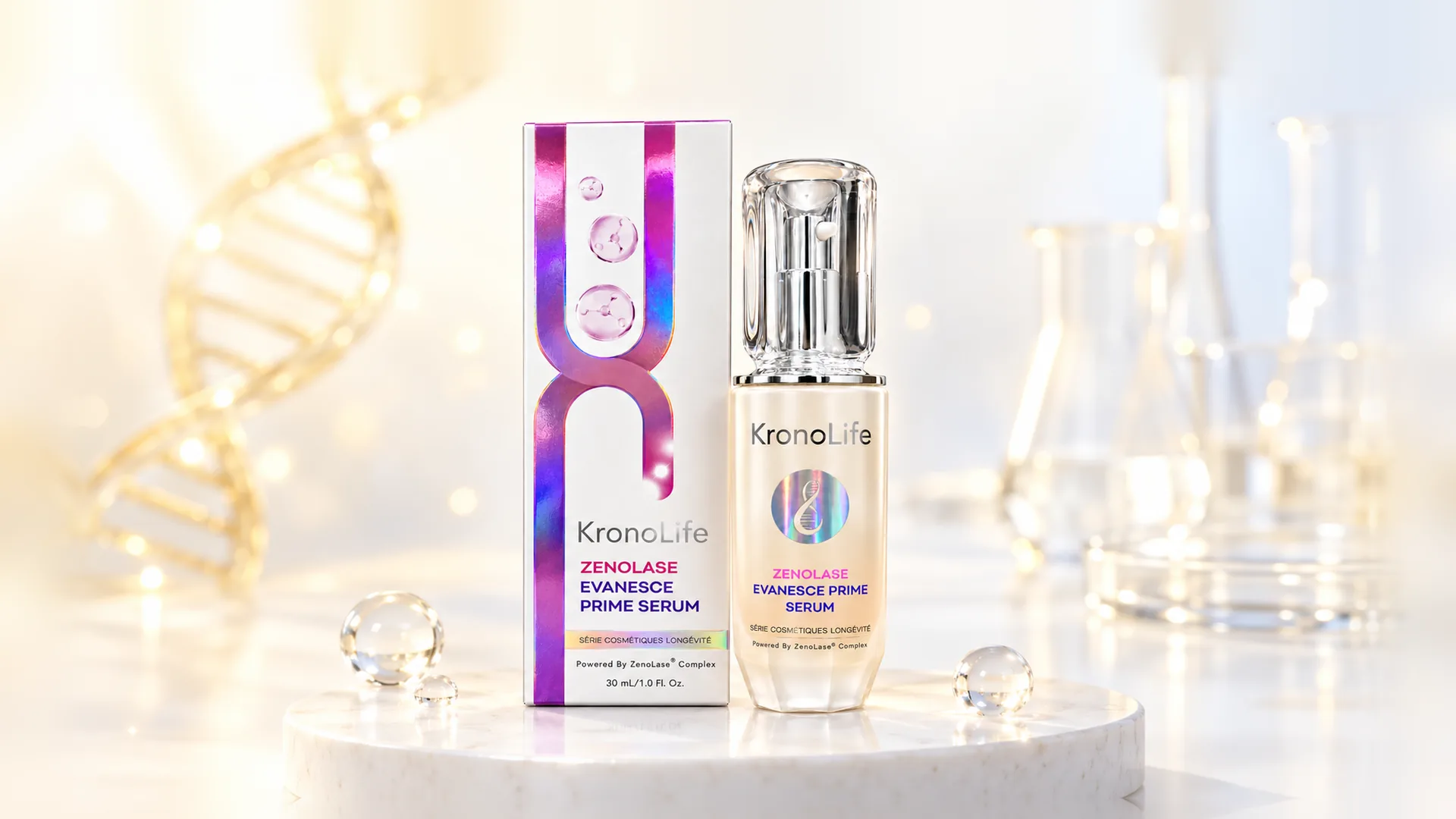
From Lab to Paris: Building and Testing the ZenoLase Senolytic Serum
A case study for brands and ingredient buyers. How a patent-pending senolytic active moved from aged human skin cells to ex vivo human skin, a finished serum, clinical use testing and a Top 3 place at Cosmetic Victories 2023 in Paris.
Read the articleSenolytics, Senomorphics and Geroprotectors: A Formulator's Guide
Three classes of longevity actives act on aging biology in different ways. This guide explains how each works, what changes when research drugs become consumer products, and how to choose a class for a brief.
Read the article