Article
The Longevity Market in Skincare: Where Senolytic Skincare Is Heading
Interest in skin longevity is rising faster than the evidence behind many products. A briefing for brand owners and product teams on the demand signals, the science and the risks.

The longevity market is the commercial space for products and services that aim to slow biological aging and extend healthy lifespan, and it has moved from clinics and supplements into skincare. Consumers who track sleep, glucose and biological age now ask what their skincare does at the level of cells, and brands are answering with senolytic serums, NAD+ boosters and peptide complexes. For a brand owner, the useful question is which of these products will still be credible once retailers, regulators and informed buyers ask for the evidence.
This briefing covers the shift from anti-aging to skin longevity, the demand signals visible in search and survey data, the science driving the category, the product types now on the market, and the hype risks that could damage it. It ends with what this means for brands planning a longevity skincare line.
What is the difference between anti-aging and skin longevity?
Anti-aging skincare targets visible signs such as wrinkles, dryness and uneven tone, while skin longevity products aim to slow or counter the biological processes that make skin age, such as cellular senescence and chronic inflammation, and to show that effect with measurable aging biomarkers.
The tools of conventional anti-aging skincare are hydration, exfoliation, sun protection and a short list of well-studied actives such as retinoids. Skin longevity asks a different question. Can a product slow or counter the biological processes that make skin age, and can that effect be measured?
Those processes are well described. The hallmarks of aging framework, updated in 2023, lists twelve: genomic instability, telomere attrition, epigenetic alterations, loss of proteostasis, disabled macroautophagy, deregulated nutrient-sensing, mitochondrial dysfunction, cellular senescence, stem cell exhaustion, altered intercellular communication, chronic inflammation and dysbiosis.[1] The guide to hallmarks of aging in skin explains how each one shows up in skin tissue.
In 2025, a group of researchers including KronoLife co-founder Dr. Tawin Iempridee proposed a definition for the category. A longevity cosmeceutical must target established hallmarks of skin aging, extend "skinspan" (skin viability, structure and function over time), and be validated in clinical trials, preferably with post-trial skin biopsies for aging biomarkers, together with a full safety assessment.[2] The definition matters commercially. It separates products that can defend a longevity claim from products that only borrow the word.
What do search trends show about the longevity market?
Search data show rising interest across the longevity market: Google Keyword Planner shows "senolytic skincare", "geroprotector" and "aging biomarkers" each up 900% year on year from a small base, while "longevity clinic" draws 10K to 100K searches a month (global, all languages, September 2025 to August 2026).
| Search term | Signal |
|---|---|
| senolytic skincare | 10 to 100 searches a month; +900% year on year |
| senolytic serum | New search term this year |
| geroprotector | +900% year on year |
| aging biomarkers | +900% year on year |
| longevity clinic | 10K to 100K searches a month; +900% |
Two readings matter. First, the base is small for the most technical terms. A 900% rise in "senolytic skincare" from a low base points to early adopters, professionals and product developers, not yet to mass consumers.
Second, the clinic term is large. "Longevity clinic" draws tens of thousands of searches a month, which suggests that the longevity idea reaches many consumers through medical and wellness services first and then pulls skincare along behind it.
Reliable public figures for the longevity skincare segment alone are scarce and vary widely between sources, so this briefing does not quote one.
What science is driving skin longevity?
Three lines of science drive skin longevity: research on senescent cells, which accumulate in aged skin and release inflammatory SASP signals;[3] research on NAD+ and mitochondria, since NAD+ levels decline with age;[4] and aging biomarkers such as DNA methylation clocks, which make longevity claims testable.
Senescent cells in skin
Senescent cells stop dividing but stay metabolically active and release inflammatory signals known as the senescence-associated secretory phenotype (SASP). They accumulate in aged skin and can drive age-related dysfunction in neighboring cells. Researchers have proposed that skin senescence may also influence aging elsewhere in the body, and that topical senolytics or senotherapeutics could counter it.[3] This is the scientific basis for senolytic skincare.
NAD+ and mitochondria
NAD+ is a coenzyme central to energy metabolism and a cofactor for enzymes such as sirtuins, PARPs and CD38. Tissue and cellular NAD+ levels decline with age in several organisms, including humans, and NAD+ influences DNA repair, cellular senescence and immune function.[4] NAD+-related actives aim at this axis. The same review is careful to note open questions: how to restore NAD+ effectively, whether doing so is safe, and whether it benefits aging humans.[4]
Biomarkers that can be measured
Aging biomarkers turn the concept into numbers. DNA methylation clocks estimate biological age from tissue samples. In one ex vivo study, a senomorphic peptide lowered senescence markers and the DNA methylation age of aged human skin explants.[5]
At the same time, a 2023 consensus paper in Cell noted that the field still lacks standards and agreement on what makes an aging biomarker reliable, and proposed validation steps.[6] Both points matter to brands. Biomarkers make longevity claims testable, and the choice of biomarker has to be defensible.
What types of longevity skincare products are on the market?
Most longevity skincare on the market falls into four categories: senolytics, which selectively clear senescent cells; senomorphics, which lower senescence markers and SASP without killing cells; NAD+-related products, which target NAD+ levels and mitochondrial function; and peptides, which act as signals for matrix repair and senescence pathways.
The guide to senolytics, senomorphics and geroprotectors covers the definitions in depth. The table focuses on what a buyer should ask for.
| Category | What it targets | Evidence to ask for | Watch-outs |
|---|---|---|---|
| Senolytic | Selective clearance of senescent cells | Reduction of senescent cells (for example by SA-β-gal) in aged human skin cells or ex vivo skin, with normal cells shown to survive | "Senolytic" used for any antioxidant; drug-study data borrowed for a cosmetic |
| Senomorphic | Lower senescence markers and SASP without killing cells | p16 or p21, SA-β-gal, IL-6 and IL-8 measured in human models | Inflammation data alone presented as an anti-senescence effect |
| NAD+-related | NAD+ levels and mitochondrial function | Intracellular NAD+ and mitochondrial markers in skin cells or tissue, plus stability and delivery data | Topical delivery and stability of NAD+ and its precursors; limited human outcome data |
| Peptides | Signals for matrix repair and senescence pathways | Collagen, laminin-5, hyaluronic acid or senescence markers in ex vivo or 3D skin, plus clinical wrinkle data | A peptide name on the label with no data on the finished formula |
Many products now combine categories. ZenoLase Evanesce Prime Serum pairs the senolytic active ZenoLase, encapsulated in Liponiosome nanoparticles, with triplex peptides. In ex vivo human skin it showed senolytic activity +158% and age-related inflammation reduced by 50 to 85%, and in a 3D skin model telomere length was restored to twice the control level (KronoLife internal data). The ZenoLase senolytic serum case study follows that product from ex vivo data to a serum on the market in Thailand.
ReverZase Regenerate Serum takes a senomorphic route, combining encapsulated ReverZase complexed with NAD+ with postbiotics, bakuchiol, an anti-wrinkle peptide and skin boosters. Clinical testing showed improved hydration, elasticity and fine lines at 14 days and radiance at 28 days (KronoLife internal data).
What do brands need for a skin longevity claim?
Brands making a skin longevity claim need three things: a named biomarker that changed, such as senescent-cell burden, SASP cytokines, collagen, telomere length or DNA methylation; a named model, such as ex vivo aged human skin or a full-thickness 3D skin model; and clinical work planned around biomarkers, ideally with post-trial skin biopsies.
For brands, the shift to skin longevity has three practical consequences.
- Claims need biomarkers. A longevity claim should say which hallmark marker changed: senescent-cell burden, SASP cytokines, collagen and hyaluronic acid, DNA damage, telomere length or DNA methylation. Without a biomarker, a "longevity" product is an anti-aging product with a new label.
- Name the model. "In ex vivo aged human skin" or "in a full-thickness 3D skin model" tells a buyer what the result means. A result without a named model invites challenge.
- Plan clinical work around biomarkers. The 2025 framework recommends post-trial skin biopsies where possible.[2] Study menus now include post-trial biopsies for longevity biomarkers, telomere length by qPCR in ex vivo and 3D skin, and epigenetic methylation arrays.
Buyers in Thailand and across ASEAN add their own expectations. R&D and regulatory managers increasingly ask for irritation data before production, for the effective dose in a finished formula, and for results relevant to the skin of their consumers. Brands that can answer those questions with study reports will move faster through retailer and distributor reviews.
What hype risks does the longevity industry face in skincare?
Five hype risks face the longevity industry in skincare: biological-age claims without validated measures, borrowed science from drug or animal studies, cell data presented as consumer results, age-reversal promises, and disease language. Each risk can be checked before launch by tracing every claim to a named study, model and marker.
Fast-growing categories attract loose claims. Five patterns are likely to cause problems for the longevity industry in skincare:
- Biological-age claims without validated measures. Consumer "skin age" scores and age tests vary in method, and the biomarker field itself still lacks agreed standards.[6] A claim tied to an unvalidated score is hard to defend.
- Borrowed science. Citing drug senolytic trials or animal lifespan data for a cosmetic that was never tested in skin.
- Cell data presented as consumer results. A fibroblast result describes a mechanism. It does not describe what a consumer will see.
- Age-reversal promises. Promising consumers that a cosmetic turns back aging overstates what any topical product can show. Measured markers in named models are the honest alternative.
- Disease language. Cosmetics that claim to prevent age-related disease move into medicinal claims and invite regulatory action.
If a claim cannot be traced to a named study, model and marker, rewrite it until it can.
Where is senolytic skincare heading?
Senolytic skincare is likely to move in five directions over the next few years: from single actives to combinations, toward delivery systems as a differentiator, toward topical and oral products used together, toward biomarker-backed claims, and into longevity clinics as a channel. The five directions are reasoned expectations based on the science and the search demand, not numerical forecasts.
- From single actives to combinations. Senolytic, senomorphic and NAD+-related actives used together, reflecting how closely the hallmarks of aging are interconnected.[1]
- Delivery as a differentiator. Encapsulation systems that protect fragile actives and improve delivery into skin.
- Topical and oral together. Senolytic supplements alongside serums, with supplements tested on ex vivo human skin using systemic-style exposure.
- Biomarker-backed claims. More studies reporting senescence, telomere and methylation markers in human-relevant models and in post-trial biopsies.
- Clinics as a channel. Longevity clinics adding skin programs, which favors products with professional-grade evidence. The guide to longevity clinic skin protocols looks at that channel in detail.
How can a brand enter longevity skincare?
A brand can enter longevity skincare by two practical routes: sourcing a patented active with a full dossier and building an in-house formula around it, or co-developing a finished product with a partner that brings the actives, the formulation and a testing program, so that the claims are designed together with the evidence.
Most brands do not run a senescence biology program of their own, and they do not need to. KronoLife works with brands on the co-development route. Its evidence framework runs in four levels: mechanism in the lab, human-relevant models such as 3D skin and ex vivo human skin, safety and compatibility, and human use evaluation. Brands considering a longevity line can start with the KronoLife partner page, which outlines how co-development projects are scoped.
FAQ
What is senolytic skincare?
Senolytic skincare contains actives intended to reduce the number of senescent cells in skin. A credible senolytic claim rests on data showing selective reduction of senescent cells in a relevant model, such as aged human skin cells or ex vivo human skin.
Is "skin longevity" a defined claim?
No, there is no single global definition of "skin longevity". A 2025 scientific framework proposes criteria: target hallmarks of skin aging, extend skinspan, and validate efficacy clinically with safety assessment. Rules on cosmetic claims differ between markets, so wording should be reviewed for each market.
How big is the longevity skincare market?
Reliable public estimates for the size of the longevity skincare market are scarce and hard to verify. The clearer indicator is search demand: interest in technical terms such as "senolytic skincare" grew 900% year on year, from a small base.
What evidence should a longevity skincare product have before launch?
At minimum, a longevity skincare product needs a mechanism linked to a hallmark of aging, efficacy in a human-relevant model with the model named, safety data on the finished formula, and clinical data for any claim about visible results. Each claim should trace back to a named study, model and marker.
References
- López-Otín C, Blasco MA, Partridge L, Serrano M, Kroemer G. Hallmarks of aging: an expanding universe. Cell. 2023;186(2):243-278. doi:10.1016/j.cell.2022.11.001
- Klinngam W, Chaiwichien A, Osotprasit S, Ruktanonchai U, Kanlayavattanakul M, Lourith N, Wongrakpanich A, Teeranachaideekul V, Iempridee T. Longevity cosmeceuticals as the next frontier in cosmetic innovation: a scientific framework for substantiating product claims. Front Aging. 2025;6:1586999. doi:10.3389/fragi.2025.1586999
- Franco AC, Aveleira C, Cavadas C. Skin senescence: mechanisms and impact on whole-body aging. Trends Mol Med. 2022;28(2):97-109. doi:10.1016/j.molmed.2021.12.003
- Covarrubias AJ, Perrone R, Grozio A, Verdin E. NAD+ metabolism and its roles in cellular processes during ageing. Nat Rev Mol Cell Biol. 2021;22(2):119-141. doi:10.1038/s41580-020-00313-x
- Zonari A, Brace LE, Al-Katib K, Porto WF, Foyt D, Guiang M, Cruz EAO, Marshall B, Gentz M, Guimarães GR, Franco OL, Oliveira CR, Boroni M, Carvalho JL. Senotherapeutic peptide treatment reduces biological age and senescence burden in human skin models. NPJ Aging. 2023;9(1):10. doi:10.1038/s41514-023-00109-1
- Moqri M, Herzog C, Poganik JR, et al. Biomarkers of aging for the identification and evaluation of longevity interventions. Cell. 2023;186(18):3758-3775. doi:10.1016/j.cell.2023.08.003
Co-development
Build a longevity product together
From concept and formula to the evidence behind your claims, we co-develop skincare and supplements with brands and clinics.

About KronoLife's scientific lead
Dr. Tawin Iempridee is Co-Founder and CEO–CTO of KronoLife, with a Ph.D. in Cancer Biology from the University of Wisconsin–Madison and a research focus on the biology of aging. Dr. Tawin has 25+ international publications and 17+ IP filings, and is senior author of a 2025 framework for substantiating longevity cosmeceutical claims.
About KronoLifeRelated reading
Longevity Clinic Skin Protocols: Building an Evidence-Based Program
For clinic owners and medical directors. How to assess skin aging meaningfully, combine procedures with homecare, validate meso and microneedle products before use, and talk to patients without overclaiming.
Read the article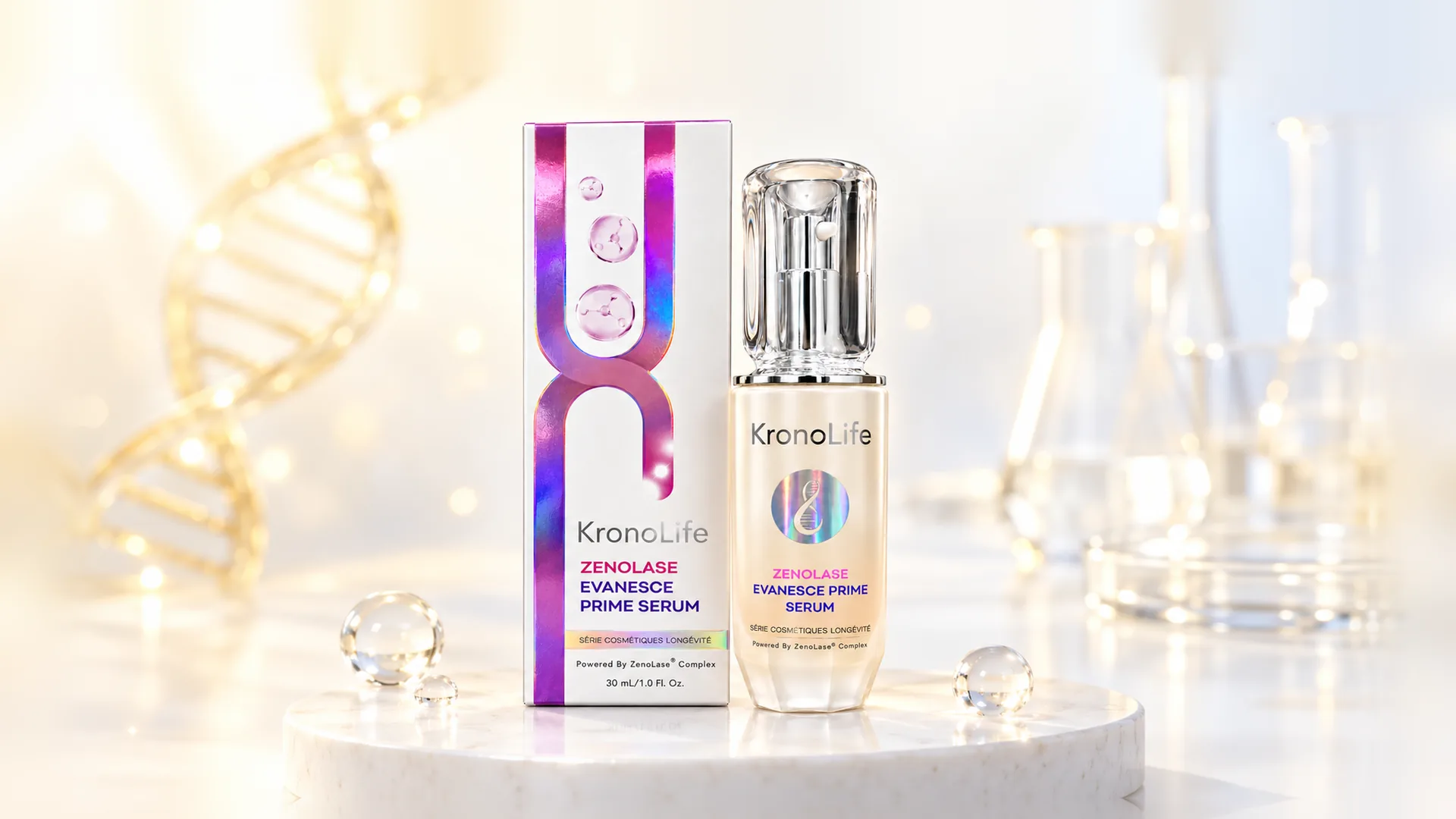
From Lab to Paris: Building and Testing the ZenoLase Senolytic Serum
A case study for brands and ingredient buyers. How a patent-pending senolytic active moved from aged human skin cells to ex vivo human skin, a finished serum, clinical use testing and a Top 3 place at Cosmetic Victories 2023 in Paris.
Read the articleSenolytics, Senomorphics and Geroprotectors: A Formulator's Guide
Three classes of longevity actives act on aging biology in different ways. This guide explains how each works, what changes when research drugs become consumer products, and how to choose a class for a brief.
Read the article