
Article
Botanical Extracts for Skin Longevity: How to Judge a Plant Active
A buyer's guide for R&D, formulation and sourcing teams. These are the questions that separate a well-documented plant active from a plant name on a label.
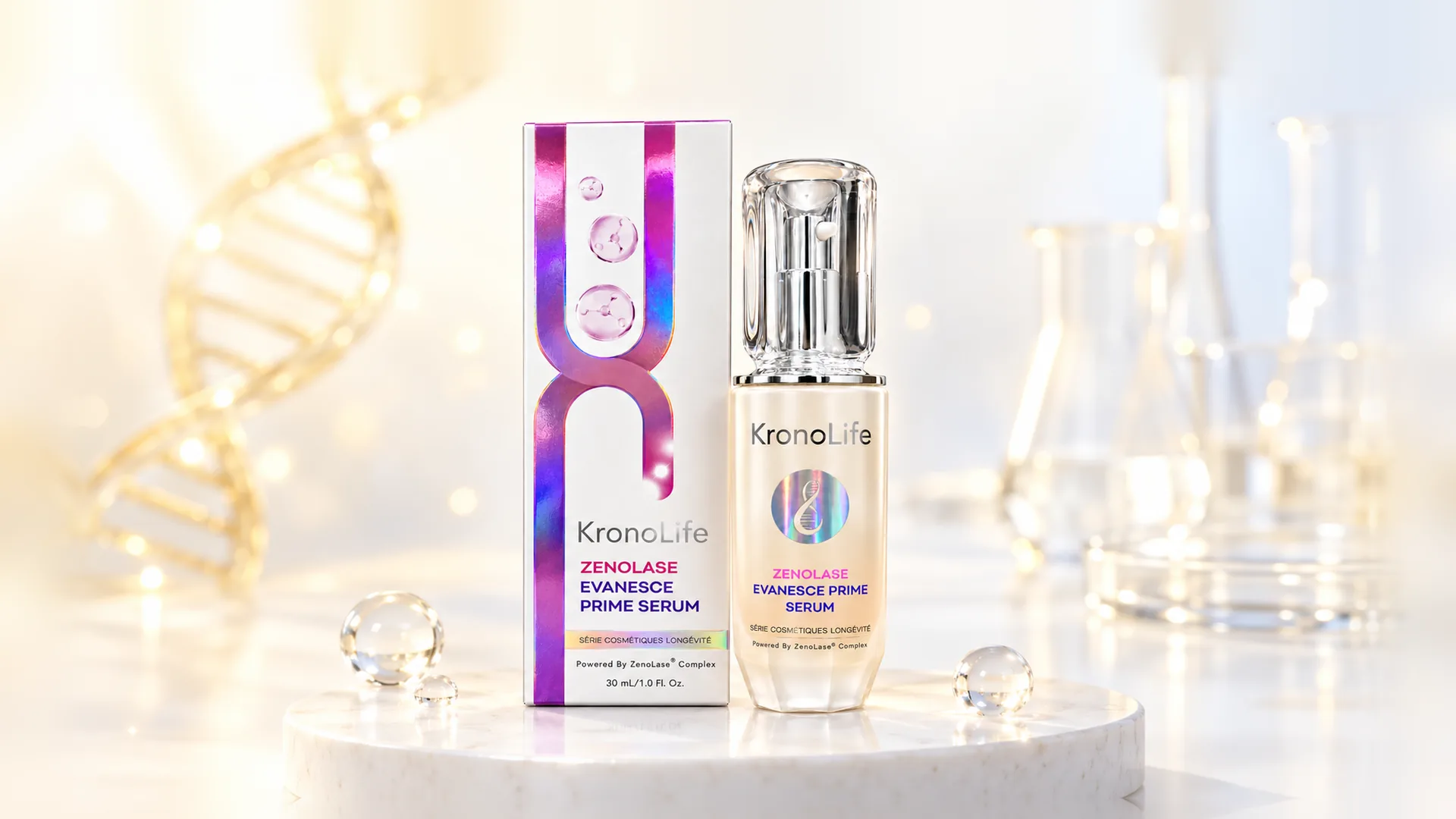
Botanical extracts are concentrated mixtures of compounds taken from a defined plant part, such as a root, rhizome, leaf or fruit, using a solvent such as water, ethanol, glycerin or supercritical CO2. They are among the most requested skincare active ingredients and among the hardest to judge. Two extracts sold under the same plant name can differ in species, plant part, solvent, marker content and biological activity. For a brand building a skin longevity product, those differences decide whether the claims will hold up when a retailer, a regulator or a competitor asks for the data.
This guide is for R&D, formulation and sourcing teams evaluating a botanical extracts supplier. It covers identity, standardization, extraction and stability, mechanism, the evidence ladder, safety, effective dose and supply, and ends with a table of questions to ask and what a good answer looks like.
Published research on a standardized extract of Kaempferia parviflora (Thai black ginger) serves as a worked example of a plant active with 3D skin, ex vivo and clinical evidence. The same logic applies to any plant you are considering.
Why do plant extracts for cosmetics need a stricter checklist?
Plant extracts for cosmetics need a stricter checklist than synthetic actives because each extract is a mixture whose composition depends on genetics, growing conditions, harvest time, plant part, drying and extraction, so a buyer needs proof of the right plant, the same marker content in every batch, and efficacy measured on matching material.
A synthetic active is one molecule with one specification. The variability of a plant extract is not a defect, but it means the documentation has to work harder. The biological effect should be measured on material made the same way as the batches being sold.
Longevity positioning adds a second layer. A 2025 scientific framework for longevity cosmeceuticals asks that an active target established hallmarks of skin aging, extend "skinspan" (skin viability, structure and function over time), and be validated in clinical trials together with a safety assessment.[1] A plant name with a long traditional history does not meet any of those criteria on its own.
How do you confirm the identity of a botanical extract?
The identity of a botanical extract is confirmed by stating the full botanical name and the plant part used, then testing every lot with at least two independent methods, such as macroscopic and microscopic examination, a chemical fingerprint by HPLC or HPTLC, or DNA barcoding.
Identity is the first gate. Misidentified or substituted plant material is a known problem across herbal products, and no efficacy data can rescue an extract made from the wrong species. Current practice combines several independent methods: macroscopic and microscopic examination, a chemical fingerprint by HPLC or HPTLC, and DNA barcoding. Reviewers call this an orthogonal approach, in which methods that reach the answer differently confirm each other and reduce false results.[3]
Ask the supplier for:
- the full botanical name and the plant part used, such as root, rhizome, leaf or fruit;
- a reference voucher specimen or authenticated reference material;
- the identity method applied to every lot, not only once when the supplier was first qualified.
Identity also covers the plant part. The rhizome and the leaves of one species can have very different chemistry, so an efficacy study on a rhizome extract says nothing about a leaf extract from the same plant.
What is a standardized extract?
A standardized extract is a plant extract adjusted so that each batch contains a defined amount of a chosen marker compound, measured by a validated method. The marker should be characteristic of the plant and, ideally, linked to the activity, so that quality control has a number to check on every batch.
Standardizing to one main marker compound is usually stronger than promising a long list of compounds. A single, well-defined marker with a validated HPLC assay and an acceptance range is something a supplier can deliver on every lot and a buyer can verify independently. Long lists of compounds on a data sheet are harder to control and often reflect one analysis of one batch. In a published Assam tea extract study, for example, the extract was standardized by group assays of its polyphenol content, and EGCG was quantified by HPLC as its main catechin.[4]
Two cautions apply. First, a marker is a quality control tool. It does not prove that the marker alone drives the effect, because the whole extract may act through several compounds. Second, the efficacy data you rely on should come from material standardized to the same specification as the batches you will buy.
What should a supplier disclose about extraction and stability?
A botanical extracts supplier should disclose the solvent, the plant-to-extract ratio, the carrier and any processing aids, confirm that efficacy batches were made by the commercial process, and provide stability data showing marker content and appearance over time at defined temperatures, not only a shelf-life statement.
Solvent, temperature, extraction ratio, carrier and drying method all shape what ends up in the extract. Water, ethanol, glycerin and supercritical CO2 pull out different compounds, and the carrier, whether glycerin, maltodextrin or oil, affects how the extract behaves in a formula.
Stability needs data, not a shelf-life statement. The Assam tea extract mentioned above, for example, kept its catechin content and color parameters over 6 months of storage under conditions recommended for topical products.[4] In the finished product, the question shifts to compatibility: pH range, color change, odor, precipitation, and interactions with preservatives and other actives.
What mechanism should a plant active for skin longevity show?
A plant active for skin longevity should act on a named hallmark of aging, such as cellular senescence, chronic inflammation or oxidative DNA damage, and show the effect with specific markers measured in human cells or tissue, not only with test-tube antioxidant assays.
For skin longevity, mechanism is the bridge between a plant and a claim. The hallmarks of aging framework lists twelve interconnected processes, including genomic instability, telomere attrition, epigenetic alterations, mitochondrial dysfunction, cellular senescence, chronic inflammation and altered intercellular communication.[2] A credible plant active names which of these it acts on and shows it with specific markers:
- Cellular senescence: senescence-associated β-galactosidase, p16 or p21, and SASP factors such as IL-6 and IL-8.
- Chronic inflammation: IL-6, IL-8, TNF-α and GDF-15.
- Oxidative and DNA damage: reactive oxygen species and 8-OHdG.
- Loss of extracellular matrix: collagen I and III, hyaluronic acid, fibrillin-1 and MMP-1.
- Mitochondrial dysfunction: mitochondrial membrane potential and intracellular NAD+.
"Antioxidant" on its own is not a longevity mechanism. Test-tube assays such as DPPH describe chemistry, not biology in skin. Ask for markers measured in human cells or tissue. For plants studied specifically for their effect on senescent cells, see the overview of natural senolytics.
The evidence ladder for plant actives
The evidence ladder for plant actives has four levels: mechanism in human skin cells, reconstructed 3D skin, ex vivo human skin, and clinical studies on volunteers. Each level answers a different question, so a good dossier climbs the ladder, and a buyer should know what each rung can and cannot show.
| Level | Typical model | What it can show | What it cannot show |
|---|---|---|---|
| 1. Mechanism | Human skin cells such as dermal fibroblasts and keratinocytes | Which pathways and markers change, and at which concentrations | Whether the extract reaches those cells through intact skin |
| 2. Reconstructed 3D skin | Reconstructed human epidermis; full-thickness skin models | Effects in layered tissue; standardized irritation screens; photoaging and pigmentation set-ups | The aged native matrix and the full range of resident cells |
| 3. Ex vivo human skin | Skin explants donated after surgery and kept alive in culture | Effects on native, aged human tissue: senescence, collagen, hyaluronic acid, inflammation | Long-term use, whole-body factors and consumer-perceived results |
| 4. Clinical | Volunteer studies with instrumental and expert grading, ideally with biopsies | Measurable change in real use, and tolerance | Mechanism, unless biopsies or biomarkers are included |
Ex vivo explants keep the native skin structure, resident cell populations and dermal matrix, which is why they sit between 3D models and clinical studies in predictive value.[9] The comparison of ex vivo human skin and 3D skin models explains when each model is the right choice.
Worked example: a standardized Kaempferia parviflora extract
Kaempferia parviflora, known as Thai black ginger, has a published research trail in skin aging that shows how a plant active can climb the evidence ladder. Purified polymethoxyflavones were first tested in primary human dermal fibroblasts and ex vivo human skin,[5] then a standardized extract in 3D skin models, safety models and a clinical study.[6]
Step 1: purified compounds in skin cells and ex vivo skin
In a 2022 study, polymethoxyflavones purified from K. parviflora rhizomes suppressed cellular senescence, reactive oxygen species and the SASP in primary human dermal fibroblasts, and increased tropocollagen synthesis. In an ex vivo human skin model of chronological aging, the same compounds attenuated senescence, restored collagen type I, fibrillin-1 and hyaluronic acid, improved epidermal thickness and blocked age-related inflammation.[5]
Step 2: a standardized extract in 3D skin, safety models and the clinic
A 2024 study moved from purified compounds to a standardized extract enriched in polymethoxyflavones. In photoaged full-thickness 3D skin models, the extract increased collagen and hyaluronic acid and reduced oxidative stress and DNA damage. It was non-irritating and non-sensitizing in reconstructed human epidermis tests and in a clinical study, and it passed in vitro genotoxicity tests performed according to OECD guidelines.[6]
What buyers can learn from it
- The compound class active in cells is the class the extract is enriched in, so mechanism and quality control point to the same chemistry.
- Efficacy was shown in two different human-relevant models: aged native skin ex vivo and photoaged 3D skin.
- Safety was addressed at three levels: reconstructed epidermis, genotoxicity and human volunteers.
- Each result names its model. "Restored collagen I in ex vivo aged human skin" is a statement a reviewer can check.
This is the pattern to look for, whatever plant you are evaluating. An extract with only test-tube antioxidant data and a traditional-use story sits on the first rung at most.
What safety data should a botanical active have?
A botanical active should have data on irritation, sensitization and genotoxicity, from OECD in vitro methods and clinical patch testing on volunteers, plus specification limits for hazards typical of botanicals: pesticide residues, heavy metals, mycotoxins, microbial load, residual solvents and naturally occurring allergens.
Safety data for a botanical active should answer three questions. Does it irritate? Does it sensitize? Does it damage DNA?
For irritation, the reconstructed human epidermis test described in OECD Test Guideline 439 identifies a material as an irritant when tissue viability, measured by MTT, falls to 50% or below.[7] OECD in vitro methods also exist for sensitization and genotoxicity, and the K. parviflora extract above is one published example of an extract tested against OECD genotoxicity guidelines.[6]
Clinical patch testing on volunteers then confirms tolerance in people. The SCCS Notes of Guidance describe how such data feed the safety evaluation of cosmetic ingredients without animal testing.[8]
Botanicals also carry hazards that synthetic actives rarely do: pesticide residues, heavy metals, mycotoxins, microbial load, residual solvents, and naturally occurring allergens. Each belongs on the specification with a limit and a method.
For a finished product, ex vivo human skin offers two practical screens: skin viability by MTT and LDH, similar in purpose to a non-irritation screen, and cumulative irritation by LDH. Timing depends on the markers and models chosen and is confirmed in the quotation.
How do you confirm the effective dose in a finished formula?
The effective dose of a botanical active is most convincingly shown by testing the finished formula at its intended use level on ex vivo human skin or a 3D skin model, because a concentration that worked on fibroblasts in a dish does not translate directly into a percentage in a cream.
A frequent gap in botanical dossiers is the distance between the concentration that worked in a study and the concentration in the product. A fibroblast result at a given microgram-per-milliliter level does not translate directly into a percentage in a cream. Penetration, the vehicle and interactions with other ingredients all intervene.
Ask three questions. At what concentration was each effect measured, and in which model? Was any study run on a finished formula, and at what use level? What use range does the supplier recommend, and on what data?
The most convincing answer is a finished-formula test on ex vivo human skin or a 3D model at the intended use level, ideally benchmarked against a known reference such as retinol, vitamin C, resveratrol or an existing product.
Thai brand owners and OEM manufacturers increasingly ask for this before production. It costs far less to learn that a dose is too low in an ex vivo study than after launch.
Supply consistency and sustainability
Supply checks for a botanical active cover batch-to-batch consistency, shown by certificates of analysis for at least three recent lots; the source and growing region; traceability from field lot to extract lot; capacity and lead time; and sustainability, including pressure on wild populations and access and benefit-sharing rules.
A plant active is a long-term supply relationship. Before committing, check:
- Batch-to-batch consistency: certificates of analysis for at least three recent lots, with the marker assay and a chromatographic fingerprint.
- Source: cultivated or wild-harvested, the growing region, and whether more than one source is qualified.
- Traceability: a documented link from field lot to extract lot.
- Capacity and lead time at the volume you plan to buy.
- Sustainability: cultivation practices, pressure on wild populations, and compliance with access and benefit-sharing rules where they apply.
Cultivated, traceable material often gives more consistent chemistry than wild collection and is easier to scale without pressure on wild stocks.
Questions to ask a botanical extracts supplier
A sourcing or R&D team evaluating a botanical extracts supplier should ask about ten areas: species and plant part, standardization, extraction process, stability, mechanism, efficacy models, safety data, effective use level, supply consistency, and IP protection such as patent filings or documented know-how.
The table below condenses this guide into questions a sourcing or R&D team can send with a request for information.
| Question | What a good answer looks like |
|---|---|
| Which species and plant part is this, and how is identity confirmed? | Full botanical name and plant part; identity confirmed for each lot by at least two independent methods, such as a chromatographic fingerprint plus DNA barcoding or microscopy |
| What is the extract standardized to? | One main marker compound with a validated HPLC method and an acceptance range on the specification |
| How is the extract made? | Solvent, plant-to-extract ratio, carrier and process stated; the same process used for efficacy batches and commercial batches |
| How stable is it? | Marker content and appearance over time at defined temperatures, plus compatibility notes on pH and common ingredients |
| Which hallmark of aging does it act on? | A named mechanism with specific markers, such as SA-β-gal, IL-6 or collagen I, measured in human cells or tissue |
| Which models support the efficacy claims? | At least one human-relevant model (3D skin or ex vivo human skin) with controls, plus clinical data where the claim requires it |
| What safety data exist? | Irritation and sensitization data, genotoxicity where relevant, contaminant limits and clinical tolerance results |
| What is the effective use level? | A recommended range supported by finished-formula data at that level |
| Can you supply consistently? | Certificates of analysis from several lots, qualified sources, stated capacity and lead time |
| Is the active protected? | Patent filings or documented know-how that make it more than a generic extract |
How are KronoLife plant actives documented?
KronoLife plant actives are documented on four evidence levels: mechanism in the lab, human-relevant models (3D skin and ex vivo human skin), safety and compatibility, and evaluation in human use. Plant sources are confidential, so each dossier centers on the specification, the models and the results.
ZenoLase, a high-purity plant extract with senolytic activity, is one example. In ex vivo adult human skin it increased senolytic activity by 255% and collagen by 94% versus control, and it was non-irritating and non-sensitizing in clinical testing (KronoLife internal data).
Specifications, evidence summaries and evaluation samples are available through the KronoLife actives page. Before writing claims for any plant active, the guide to longevity claim substantiation shows how to match each claim to a model and an endpoint.
FAQ
What does "standardized extract" mean?
A standardized extract is one adjusted so that each batch contains a defined amount of a chosen marker compound. The amount is measured by a validated method such as HPLC and must fall within an acceptance range written on the specification.
Is a higher marker content always better?
No. A higher marker content helps only if the marker relates to the activity and the efficacy data were generated on material with the same specification. Consistency between batches matters more than the highest possible number.
Can a botanical extract be described as senolytic?
Yes, but only if studies show that it selectively reduces senescent cells in a relevant model. Suitable models include aged human skin cells or ex vivo human skin, and the model should be named alongside the claim.
Do we need clinical data for every claim?
No. Claims about visible or measurable change in consumers generally need clinical data, while claims about biological markers can rest on ex vivo or 3D skin data when the model is stated. Check the rules in each market where the product will be sold.
References
- Klinngam W, Chaiwichien A, Osotprasit S, Ruktanonchai U, Kanlayavattanakul M, Lourith N, Wongrakpanich A, Teeranachaideekul V, Iempridee T. Longevity cosmeceuticals as the next frontier in cosmetic innovation: a scientific framework for substantiating product claims. Front Aging. 2025;6:1586999. doi:10.3389/fragi.2025.1586999
- López-Otín C, Blasco MA, Partridge L, Serrano M, Kroemer G. Hallmarks of aging: an expanding universe. Cell. 2023;186(2):243-278. doi:10.1016/j.cell.2022.11.001
- Nazar N, Saxena A, Sebastian A, Slater A, Sundaresan V, Sgamma T. Integrating DNA barcoding within an orthogonal approach for herbal product authentication: a narrative review. Phytochem Anal. 2025;36(1):7-29. doi:10.1002/pca.3466
- Kanlayavattanakul M, Khongkow M, Klinngam W, Chaikul P, Lourith N, Chueamchaitrakun P. Recent insights into catechins-rich Assam tea extract for photoaging and senescent ageing. Sci Rep. 2024;14(1):2253. doi:10.1038/s41598-024-52781-2
- Klinngam W, Rungkamoltip P, Thongin S, Joothamongkhon J, Khumkhrong P, Khongkow M, Namdee K, Tepaamorndech S, Chaikul P, Kanlayavattanakul M, Lourith N, Piboonprai K, Ruktanonchai U, Asawapirom U, Iempridee T. Polymethoxyflavones from Kaempferia parviflora ameliorate skin aging in primary human dermal fibroblasts and ex vivo human skin. Biomed Pharmacother. 2022;145:112461. doi:10.1016/j.biopha.2021.112461
- Klinngam W, Rungkamoltip P, Wongwanakul R, Joothamongkhon J, Du-A-Man S, Khongkow M, Asawapirom U, Iempridee T, Ruktanonchai U. Skin rejuvenation efficacy and safety evaluation of Kaempferia parviflora standardized extract (BG100) in human 3D skin models and clinical trial. Biomolecules. 2024;14(7):776. doi:10.3390/biom14070776
- OECD. Test No. 439: In Vitro Skin Irritation: Reconstructed Human Epidermis Test Method. OECD Guidelines for the Testing of Chemicals, Section 4. Paris: OECD Publishing; 2025. doi:10.1787/9789264242845-en
- Scientific Committee on Consumer Safety (SCCS). The SCCS Notes of Guidance for the testing of cosmetic ingredients and their safety evaluation, 11th revision, 30-31 March 2021, SCCS/1628/21. Regul Toxicol Pharmacol. 2021;127:105052. doi:10.1016/j.yrtph.2021.105052
- Eberlin S, da Silva MS, Facchini G, da Silva GH, Pinheiro ALTA, Eberlin S, Pinheiro ADS. The ex vivo skin model as an alternative tool for the efficacy and safety evaluation of topical products. Altern Lab Anim. 2020;48(1):10-22. doi:10.1177/0261192920914193
Longevity actives
Evaluate a patented longevity active
Ask for the technical dossier of ZenoLase, ReverZase, DionySenz or KronoZase: mechanism, efficacy by model, safety and recommended use level.

About KronoLife's scientific lead
Dr. Tawin Iempridee is Co-Founder and CEO–CTO of KronoLife, with a Ph.D. in Cancer Biology from the University of Wisconsin–Madison and a research focus on the biology of aging. Dr. Tawin has 25+ international publications and 17+ IP filings, and is senior author of a 2025 framework for substantiating longevity cosmeceutical claims.
About KronoLifeRelated reading
From Lab to Paris: Building and Testing the ZenoLase Senolytic Serum
A case study for brands and ingredient buyers. How a patent-pending senolytic active moved from aged human skin cells to ex vivo human skin, a finished serum, clinical use testing and a Top 3 place at Cosmetic Victories 2023 in Paris.
Read the articleSenolytics, Senomorphics and Geroprotectors: A Formulator's Guide
Three classes of longevity actives act on aging biology in different ways. This guide explains how each works, what changes when research drugs become consumer products, and how to choose a class for a brief.
Read the article
Senescent Cells in Skin Aging: What R&D Teams Need to Know
Cellular senescence links UV, DNA damage and time to collagen loss, chronic inflammation and uneven pigment. This guide covers the biology, the human-skin evidence, and what it means for actives, endpoints and claims.
Read the article