
Article
Natural Senolytics: Plant Compounds and the Evidence Behind Them
Fisetin, quercetin, procyanidin C1 and other plant compounds can clear senescent cells in the lab. This article grades the evidence for each and sets out what a botanical needs before it becomes a validated skin active.
Natural senolytics are plant-derived compounds that selectively remove senescent cells, the damaged cells that stop dividing, resist death and release inflammatory signals as tissue ages. Two of the first senolytics described, quercetin and fisetin, are dietary flavonoids, and that origin has made plant compounds a natural starting point for skincare and supplement developers. The evidence behind them, however, ranges from a single cell-culture paper to registered human trials.
This article sorts the most widely studied senolytic compounds from plants by evidence level, then sets out what it takes to turn one into a skin active that a formulator, a regulator and a reviewer will accept. It is written for R&D teams evaluating botanical extracts or building a senescence claim.
What are natural senolytics?
Natural senolytics are plant-derived compounds that induce apoptosis in senescent cells while sparing healthy cells, by disabling the pro-survival pathways that senescent cells rely on. Plant compounds that instead suppress the senescence-associated secretory phenotype (SASP) and other features of senescence without killing the cell are senomorphics.[1] Both are useful, but they support different claims, so the first question for any natural compound is which of the two it does, and at what concentration.
"Natural" describes the source, not the safety or the selectivity. Some plant senolytics, such as piperlongumine, were first studied for anticancer activity,[2] and the property that kills senescent cells can harm normal cells at higher doses. The same compound can also change class with concentration. Procyanidin C1 from grape seed extract inhibited SASP formation at low concentrations and selectively killed senescent cells at higher ones.[3]
Which plant compounds are senolytic?
The plant compounds most studied as senolytic compounds are quercetin, fisetin, procyanidin C1 from grape seed, piperlongumine from long pepper, gingerenone A from ginger and EF24, a synthetic analog of turmeric curcumin. Other dietary flavonoids, such as apigenin and kaempferol, act as senomorphics instead, suppressing the SASP without killing senescent cells.
Quercetin
Quercetin is a flavonol found in many fruits and vegetables. It was one of the first two senolytics identified, through a screen built on the survival pathways of senescent cells. On its own it was more effective against senescent human endothelial cells than against senescent fat cell progenitors, and it was combined with the drug dasatinib to cover more cell types.[4]
Almost all in vivo and human data on quercetin as a senolytic come from that combination, including two small pilot trials in people with idiopathic pulmonary fibrosis and diabetic kidney disease.[5][6] Quercetin alone has much weaker senolytic evidence than its reputation suggests.
Fisetin
Fisetin is a flavonoid found in strawberries, apples and other fruits and vegetables. It selectively induced apoptosis in senescent human endothelial cells, but was not senolytic in senescent IMR90 lung fibroblasts or primary preadipocytes.[7]
In a screen of 10 flavonoids against senescent mouse and human fibroblasts, fisetin was the most potent senolytic. Given to wild-type mice late in life, it reduced senescence markers in several tissues, reduced age-related pathology and extended median and maximum lifespan. In human adipose tissue explants it reduced senescence in a subset of cells.[8]
Skin-specific fisetin senolytic data are now available. In senescent primary human dermal fibroblasts, induced by long-term passaging or radiation, fisetin selectively eliminated senescent cells through caspase-mediated apoptosis. In aged human skin grafted onto nude mice and dosed with fisetin for 30 days, collagen density increased and SASP factors, including MMPs and interleukins, decreased.[9] The dosing was by injection in mice, so the result supports the mechanism in human dermis, not a topical or oral consumer effect.
Procyanidin C1
Procyanidin C1 (PCC1) is a polyphenol from grape seed extract. It was found by screening a library of natural products for effects on senescent cells. It suppressed the SASP at low concentrations and killed senescent cells at higher ones, possibly by promoting reactive oxygen species and mitochondrial dysfunction. Intermittent dosing of irradiated, senescent cell-implanted or naturally aged mice alleviated physical dysfunction and prolonged survival.[3]
Piperlongumine
Piperlongumine is a natural product from long pepper with reported anticancer activity. It preferentially killed senescent human WI-38 fibroblasts whether senescence was induced by radiation, replicative exhaustion or an oncogene, acted synergistically with the senolytic drug ABT-263, and served as a lead for analogs with better potency or selectivity.[2]
Curcumin analogs
Curcumin, from turmeric, has broad anti-aging associations, but the clearest senolytic data are for a synthetic analog. Among several curcumin analogs tested, EF24 was the most potent and broad-spectrum senolytic, inducing apoptosis in senescent cells by increasing the breakdown of anti-apoptotic BCL-2 family proteins.[10] This is a useful reminder that a plant scaffold and a plant extract are not the same thing.
Gingerenone A
Researchers screened several plant extracts on radiation-induced senescent WI-38 fibroblasts. Ginger extract selectively killed senescent cells without affecting proliferating cells. Among its components, gingerenone A selectively eliminated senescent cells, and both gingerenone A and dasatinib plus quercetin suppressed the SASP.[11]
Senomorphic flavonoids: apigenin and kaempferol
Not every flavonoid is senolytic. In bleomycin-induced senescent BJ fibroblasts, apigenin and kaempferol strongly inhibited SASP factors such as IL-6, IL-8 and MMP-3 through the NF-κB pathway, and oral apigenin lowered SASP markers in the kidneys of aged rats.[12] These compounds belong in the senomorphic column, which is often a better fit for daily-use products.
How strong is the evidence for each natural senolytic?
The evidence for natural senolytics differs widely by compound. Many have cell-culture data only, fisetin and procyanidin C1 extended lifespan or survival in aged mice, and human data are limited to small pilot trials of quercetin with dasatinib and registered fisetin trials, of which few have reported results. The table grades each compound by the strongest model in which it has been reported to act on senescent cells. "Not reported" refers to the studies cited here.
| Compound | Plant source | Activity | Cells | Animals or tissue | Humans |
|---|---|---|---|---|---|
| Quercetin | Many fruits and vegetables | Senolytic in some cell types | Senescent endothelial cells | With dasatinib: lower senescent cell burden in aged mice | Only with dasatinib: small pilot trials in disease settings |
| Fisetin | Strawberries, apples, other produce | Senolytic, cell-type restricted | Senescent endothelial cells and dermal fibroblasts | Longer lifespan in aged mice; aged human skin grafts on mice | Many registered trials; completed results limited and mixed |
| Procyanidin C1 | Grape seed | Senomorphic at low dose, senolytic at higher dose | Senescent cells in culture | Better function and survival in aged mice | Not reported |
| Piperlongumine | Long pepper | Senolytic | Senescent WI-38 fibroblasts | Not reported | Not reported |
| EF24 | Synthetic analog of turmeric curcumin | Senolytic, broad spectrum | Several senescent cell types | Not reported | Not reported |
| Gingerenone A | Ginger | Senolytic, SASP suppression | Senescent WI-38 fibroblasts | Not reported | Not reported |
| Apigenin, kaempferol | Widespread dietary flavonoids | Senomorphic | Senescent BJ fibroblasts | Apigenin: lower SASP markers in aged rat kidney | Not reported |
| K. parviflora polymethoxyflavones | Thai black ginger rhizome | Senescence and SASP suppression | Primary human dermal fibroblasts | Ex vivo human skin; photoaged 3D skin models | Clinical irritation and sensitization testing of a standardized extract |
What human evidence supports fisetin as a senolytic?
Human evidence for fisetin as a senolytic is still limited. A 2026 review found 34 registered clinical trials of fisetin, but only 4 completed trials had results available, and those results were heterogeneous: some reported favorable changes in metabolic or inflammatory outcomes, others found no clear benefit.[13]
Fisetin is now being tested on its own in many registered human trials. The trials listed on ClinicalTrials.gov and the WHO trial registry cover frailty, metabolic, cardiovascular, neurodegenerative and other age-related conditions. In the completed trials, small samples and exploratory designs limited interpretation.[13]
The trial designs are informative for product developers. One phase 2 randomized, placebo-controlled study in older adults gives fisetin at 20 mg/kg per day by mouth for two consecutive days, with reduction in blood inflammation markers as the primary outcome.[14] That is a short, intermittent course at about 1.4 g per day for a 70 kg adult, following the "hit-and-run" logic of senolytic drugs. A daily supplement at a much lower dose is a different intervention, and it cannot borrow the rationale of these trials without its own data.
What does a plant compound need to become a validated skin active?
A plant compound needs six kinds of evidence to become a validated skin active: selectivity in senescent versus normal skin cells, a mapped dose window, skin penetration or oral bioavailability, stability in the formula, standardization to a marker compound, and a full safety package covering irritation, sensitization and genotoxicity. A senolytic result in a cell culture paper is the start of development, not the end.
Selectivity in skin cells
Senolytic activity is cell-type specific. Fisetin cleared senescent endothelial cells but not senescent lung fibroblasts in one study, and senescent dermal fibroblasts in another.[7][9] A skin active should be tested on senescent and non-senescent dermal fibroblasts, and where pigment or barrier claims are planned, on keratinocytes or melanocytes. Report the ratio between the concentration that kills senescent cells and the one that harms normal cells.
A mapped dose window
Because many plant compounds are senomorphic at low dose and senolytic at higher dose, the full concentration-response curve matters.[3] The concentration that reaches the target cells from the finished formula should sit inside the selective range.
Skin penetration or bioavailability
Many polyphenols are poorly soluble and penetrate skin slowly. A topical active needs a delivery system and proof that the active reaches viable tissue. An oral active needs evidence that it reaches skin in active form. Testing the finished formula on full-thickness tissue answers more than testing the raw compound on cells.
Stability
Flavonoids and other polyphenols can oxidize or degrade with light, heat and pH changes. Stability of the active in the formula, and of its activity, should be confirmed over the intended shelf life. Encapsulation can help, but the encapsulated form then becomes the material to test.
Standardization to a marker compound
A botanical extract varies with plant source, harvest and process. Standardizing to one or more defined marker compounds, measured in every batch, links the efficacy data to the material a customer will buy. Without it, a result in one lot says little about the next.
Safety
Compounds that induce apoptosis need data on normal skin cells, irritation and sensitization, and genotoxicity. Natural origin does not remove this requirement. Supplements need tolerability data at the labeled dose.
- Identify and purify Isolate the active compounds and confirm their identity.
- Prove selectivity Concentration-response in senescent and non-senescent human skin cells.
- Standardize Fix marker compounds and batch specifications for the extract.
- Test in tissue Ex vivo human skin and 3D skin models with the finished or encapsulated form.
- Confirm safety Irritation, sensitization and genotoxicity, then clinical tolerance.
- Measure in people Human-use study, ideally with aging biomarkers.
Example: Kaempferia parviflora polymethoxyflavones in skin
Research on Kaempferia parviflora (Thai black ginger) polymethoxyflavones shows the development path for a botanical skin active in practice: purified compounds in primary human dermal fibroblasts and ex vivo human skin, then a standardized extract in photoaged 3D skin models and clinical safety testing. The activity shown is senescence suppression rather than senolysis. Three polymethoxyflavones purified from the rhizome, 5,7-dimethoxyflavone, 5,7,4'-trimethoxyflavone and 3,5,7,3',4'-pentamethoxyflavone, suppressed cellular senescence, reactive oxygen species and the SASP in primary human dermal fibroblasts, increased tropocollagen synthesis and reduced free radical-induced cellular and mitochondrial damage. In ex vivo human skin they attenuated senescence, restored collagen type I, fibrillin-1 and hyaluronic acid, improved epidermal thickness and epidermal-dermal stability, and blocked age-related inflammation.[15]
A standardized extract enriched with five polymethoxyflavones was then tested in photoaged full-thickness 3D skin models, where it promoted collagen and hyaluronic acid, reduced oxidative stress and lowered DNA damage. It was non-irritating and non-sensitizing on reconstructed human epidermis and in clinical testing, and passed in vitro genotoxicity tests run to OECD guidelines.[16] The sequence, from purified compounds to a standardized extract, human tissue models, safety and clinical testing, matches the framework proposed for longevity cosmeceuticals: target a hallmark of skin aging, show an effect on skin over time, and validate in clinical trials with safety assessment.[17]
What should you ask a supplier of senolytic botanical extracts?
A buyer of senolytic botanical extracts should ask whether the extract itself was tested, in which senescent skin cells and tissue model, at what concentration compared with the finished formula, whether the activity is senolytic or senomorphic, which marker compound standardizes each batch, and which safety data exist. Botanical extracts sold as senolytic vary widely in the evidence behind them. These questions separate data from borrowed literature.
- Was the extract itself tested, or only a compound it contains? Literature on fisetin or quercetin does not transfer to an extract with an unknown content of either.
- Which senescent cell type, and which inducer? Ask for dermal fibroblast data, with non-senescent controls.
- Senolytic or senomorphic? Ask for both cell counts (SA-β-gal, p16INK4a) and SASP readouts (IL-6, IL-8, MMP-1). The SA-β-gal senescence assay guide explains what a good result looks like.
- What concentration was tested, and what is in the finished formula? The two should match.
- Which tissue model? Ex vivo human skin and 3D skin carry more weight than cell monolayers.
- What is the marker compound and its batch range? Without standardization, efficacy data describe one lot.
- What safety data exist? Irritation, sensitization and genotoxicity at minimum.
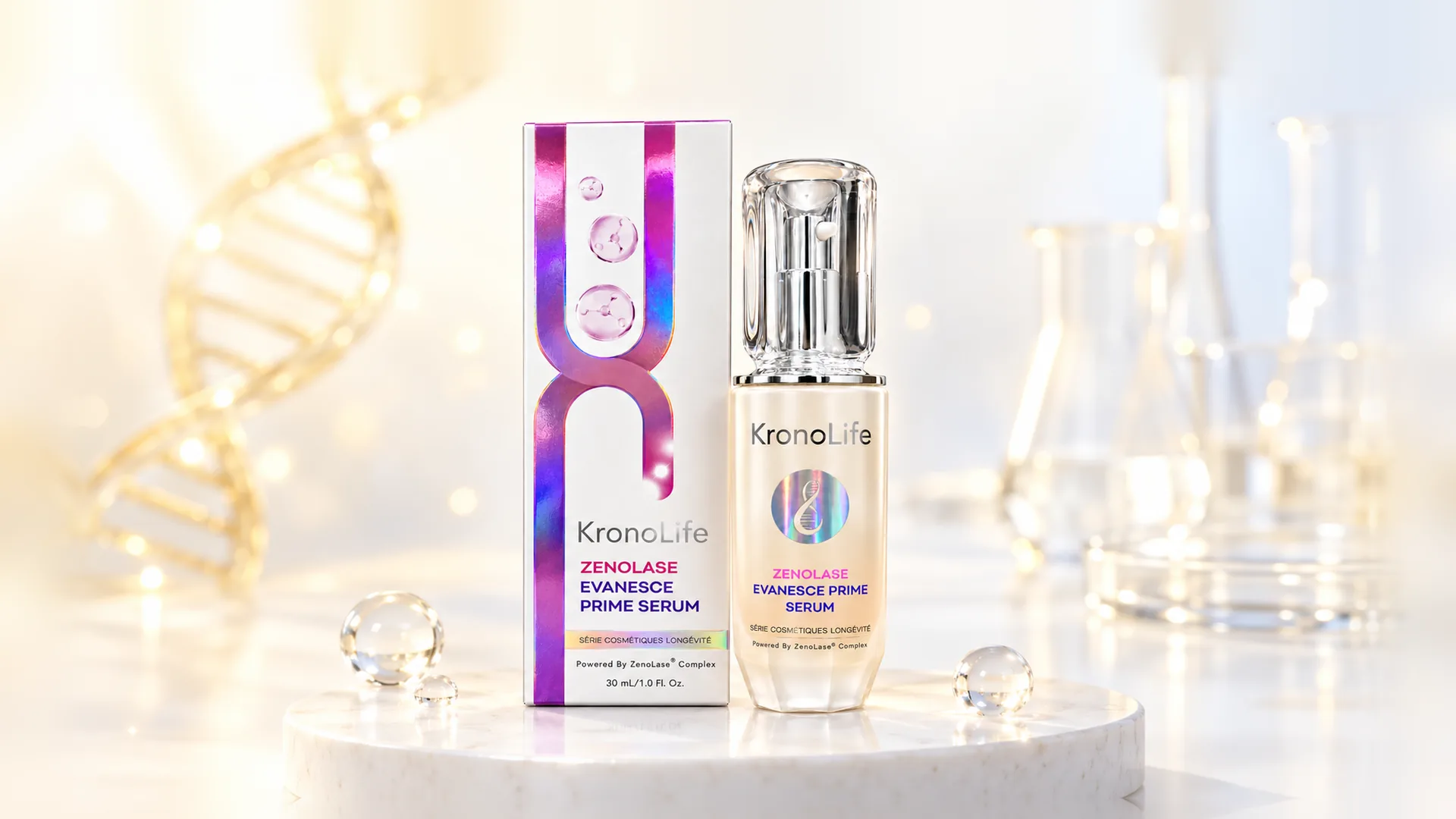
KronoLife's senolytic actives were developed along this path. ZenoLase, a high-purity plant extract for skincare, and DionySenz, a senolytic active for supplements, are plant-derived, and the plant sources are confidential. A natural senolytic formulation is the subject of patent application PCT/TH2025/050028.
In KronoLife internal data on ex vivo adult human skin, ZenoLase increased senolytic activity by 255% versus control and was non-irritating and non-sensitizing in clinical testing. In ex vivo aged human skin, DionySenz reduced senescent cells by about 60%, in the same range as the reference senolytics navitoclax and dasatinib plus quercetin run as laboratory comparators in the same model. Supply and licensing options are described on the KronoLife actives page. For the wider picture of plant-derived longevity ingredients, see Botanical Extracts for Skin Longevity, and for how senolytics compare with senomorphics and geroprotectors, see our formulator's guide.
FAQ
Is fisetin a senolytic in skin?
In laboratory studies, yes. Fisetin selectively eliminated senescent human dermal fibroblasts in culture and reduced SASP factors in aged human skin grafted onto mice. Controlled human data on skin outcomes are still lacking in the studies reviewed here, and its senolytic effect varies by cell type.
Is quercetin alone a senolytic?
Only partly. Quercetin alone showed senolytic activity against some senescent cell types in culture, mainly endothelial cells. Most in vivo and human data come from its combination with the drug dasatinib, so results from that combination should not be attributed to quercetin alone.
Are natural senolytics safer than senolytic drugs?
Not automatically. Some plant senolytics were first studied for anticancer activity, and selectivity depends on dose and cell type. Each active needs its own safety data at the concentration used.
How long does it take to validate a botanical senolytic on human skin?
Timing depends on the markers and models chosen and is confirmed in the project quotation. A senolytic activity study on ex vivo human skin is usually combined with inflammation and collagen ELISAs, and safety, stability and human-use studies are added as further stages.
References
- Zhang L, Pitcher LE, Prahalad V, Niedernhofer LJ, Robbins PD. Targeting cellular senescence with senotherapeutics: senolytics and senomorphics. FEBS J. 2023;290(5):1362-1383. doi:10.1111/febs.16350
- Wang Y, Chang J, Liu X, Zhang X, Zhang S, Zhang X, et al. Discovery of piperlongumine as a potential novel lead for the development of senolytic agents. Aging (Albany NY). 2016;8(11):2915-2926. doi:10.18632/aging.101100
- Xu Q, Fu Q, Li Z, Liu H, Wang Y, Lin X, et al. The flavonoid procyanidin C1 has senotherapeutic activity and increases lifespan in mice. Nat Metab. 2021;3(12):1706-1726. doi:10.1038/s42255-021-00491-8
- Zhu Y, Tchkonia T, Pirtskhalava T, Gower AC, Ding H, Giorgadze N, et al. The Achilles' heel of senescent cells: from transcriptome to senolytic drugs. Aging Cell. 2015;14(4):644-58. doi:10.1111/acel.12344
- Justice JN, Nambiar AM, Tchkonia T, LeBrasseur NK, Pascual R, Hashmi SK, et al. Senolytics in idiopathic pulmonary fibrosis: Results from a first-in-human, open-label, pilot study. EBioMedicine. 2019;40:554-563. doi:10.1016/j.ebiom.2018.12.052
- Hickson LJ, Langhi Prata LGP, Bobart SA, Evans TK, Giorgadze N, Hashmi SK, et al. Senolytics decrease senescent cells in humans: Preliminary report from a clinical trial of Dasatinib plus Quercetin in individuals with diabetic kidney disease. EBioMedicine. 2019;47:446-456. doi:10.1016/j.ebiom.2019.08.069
- Zhu Y, Doornebal EJ, Pirtskhalava T, Giorgadze N, Wentworth M, Fuhrmann-Stroissnigg H, et al. New agents that target senescent cells: the flavone, fisetin, and the BCL-XL inhibitors, A1331852 and A1155463. Aging (Albany NY). 2017;9(3):955-963. doi:10.18632/aging.101202
- Yousefzadeh MJ, Zhu Y, McGowan SJ, Angelini L, Fuhrmann-Stroissnigg H, Xu M, et al. Fisetin is a senotherapeutic that extends health and lifespan. EBioMedicine. 2018;36:18-28. doi:10.1016/j.ebiom.2018.09.015
- Takaya K, Asou T, Kishi K. Fisetin, a potential skin rejuvenation drug that eliminates senescent cells in the dermis. Biogerontology. 2024;25(1):161-175. doi:10.1007/s10522-023-10064-9
- Li W, He Y, Zhang R, Zheng G, Zhou D. The curcumin analog EF24 is a novel senolytic agent. Aging (Albany NY). 2019;11(2):771-782. doi:10.18632/aging.101787
- Moaddel R, Rossi M, Rodriguez S, Munk R, Khadeer M, Abdelmohsen K, et al. Identification of gingerenone A as a novel senolytic compound. PLoS One. 2022;17(3):e0266135. doi:10.1371/journal.pone.0266135
- Lim H, Park H, Kim HP. Effects of flavonoids on senescence-associated secretory phenotype formation from bleomycin-induced senescence in BJ fibroblasts. Biochem Pharmacol. 2015;96(4):337-48. doi:10.1016/j.bcp.2015.06.013
- Sandoval-Caballero C, Roemer Z, Kotz CM, Puskarich MA, Mavanji V, Schmidt EL, et al. Clinical Translation of Fisetin for Age-Related Diseases: Current Evidence and Future Opportunities. Nutrients. 2026;18(18):2999. doi:10.3390/nu18182999
- ClinicalTrials.gov. Alleviation by Fisetin of Frailty, Inflammation, and Related Measures in Older Adults. NCT03675724. U.S. National Library of Medicine. https://clinicaltrials.gov/study/NCT03675724
- Klinngam W, Rungkamoltip P, Thongin S, Joothamongkhon J, Khumkhrong P, Khongkow M, Namdee K, Tepaamorndech S, Chaikul P, Kanlayavattanakul M, Lourith N, Piboonprai K, Ruktanonchai U, Asawapirom U, Iempridee T. Polymethoxyflavones from Kaempferia parviflora ameliorate skin aging in primary human dermal fibroblasts and ex vivo human skin. Biomed Pharmacother. 2022;145:112461. doi:10.1016/j.biopha.2021.112461
- Klinngam W, Rungkamoltip P, Wongwanakul R, Joothamongkhon J, Du-A-Man S, Khongkow M, Asawapirom U, Iempridee T, Ruktanonchai U. Skin Rejuvenation Efficacy and Safety Evaluation of Kaempferia parviflora Standardized Extract (BG100) in Human 3D Skin Models and Clinical Trial. Biomolecules. 2024;14(7):776. doi:10.3390/biom14070776
- Klinngam W, Chaiwichien A, Osotprasit S, Ruktanonchai U, Kanlayavattanakul M, Lourith N, Wongrakpanich A, Teeranachaideekul V, Iempridee T. Longevity cosmeceuticals as the next frontier in cosmetic innovation: a scientific framework for substantiating product claims. Front Aging. 2025;6:1586999. doi:10.3389/fragi.2025.1586999
Longevity actives
Evaluate a patented longevity active
Ask for the technical dossier of ZenoLase, ReverZase, DionySenz or KronoZase: mechanism, efficacy by model, safety and recommended use level.

About KronoLife's scientific lead
Dr. Tawin Iempridee is Co-Founder and CEO–CTO of KronoLife, with a Ph.D. in Cancer Biology from the University of Wisconsin–Madison and a research focus on the biology of aging. Dr. Tawin has 25+ international publications and 17+ IP filings, and is senior author of a 2025 framework for substantiating longevity cosmeceutical claims.
About KronoLifeRelated reading
From Lab to Paris: Building and Testing the ZenoLase Senolytic Serum
A case study for brands and ingredient buyers. How a patent-pending senolytic active moved from aged human skin cells to ex vivo human skin, a finished serum, clinical use testing and a Top 3 place at Cosmetic Victories 2023 in Paris.
Read the articleSenolytics, Senomorphics and Geroprotectors: A Formulator's Guide
Three classes of longevity actives act on aging biology in different ways. This guide explains how each works, what changes when research drugs become consumer products, and how to choose a class for a brief.
Read the article
Senescent Cells in Skin Aging: What R&D Teams Need to Know
Cellular senescence links UV, DNA damage and time to collagen loss, chronic inflammation and uneven pigment. This guide covers the biology, the human-skin evidence, and what it means for actives, endpoints and claims.
Read the article