
Article
Longevity Ingredients Compared: NAD+, Spermidine, Urolithin A and Senolytic Botanicals
A formulator's comparison of the main longevity ingredients: which hallmark of aging each one targets, what the human trials actually showed, and what that means for oral and topical products.

Longevity ingredients are compounds and extracts that target the hallmarks of aging, the biological processes that drive aging, such as NAD+ decline, mitochondrial dysfunction, disabled autophagy, oxidative damage and cellular senescence. They now appear in product briefs for both skincare and supplements. NAD+ precursors, urolithin A, spermidine, ergothioneine and senolytic botanicals such as fisetin are the names buyers ask about most. The science behind each one is real, but it is uneven, and the evidence that supports a muscle or blood claim does not automatically support a skin claim.
This is a formulator's comparison, not consumer advice. For each ingredient we set out the hallmark of aging it targets, the mechanism, the strongest human evidence we could verify in PubMed, whether that evidence is oral or topical, and the practical questions to ask a supplier. A comparison table follows, then a checklist of evidence a buyer should request before choosing a longevity active.
How do you compare longevity ingredients?
A formulator should compare longevity ingredients on five questions: which hallmark of aging each one acts on, its mechanism, its strongest human evidence, whether that evidence is oral or topical, and whether it can be formulated at the dose used in the study.
The hallmarks of aging, updated to twelve in 2023, are the most useful frame for comparison because they separate causes from symptoms.[1] Our guide to the hallmarks of aging in skin maps each one to a skin marker. For each ingredient, ask these five questions.
- Which hallmark does it act on? One primary hallmark is easier to test and claim than a vague "anti-aging" effect.
- What is the mechanism? Raising a cofactor, clearing damaged organelles and removing senescent cells call for different study designs.
- What is the strongest human evidence? A randomized, placebo-controlled trial with a stated primary outcome, and whether that outcome was met.
- Oral or topical? Most longevity trials are oral and measure blood or muscle. Skin claims need skin data.
- Can it be formulated? Solubility, stability and bioavailability decide whether the dose in a finished product resembles the dose in the study.
NAD+ precursors: NMN, NR and niacinamide
NAD+ precursors are compounds that cells convert into NAD+, a coenzyme whose levels decline with age; NMN and NR are studied mainly as oral supplements, and niacinamide is established in topical skincare. Oral NMN and NR raise blood NAD+ in randomized trials, while topical niacinamide has the clearest skin appearance data of the three.
NAD+ is a coenzyme for redox reactions and an essential cofactor for sirtuins, CD38 and PARP enzymes. It influences metabolism, DNA repair, chromatin remodeling, senescence and immune function, and tissue NAD+ levels decline with age in rodents and in humans.[2] That places NAD+ precursors on two hallmarks: deregulated nutrient sensing and mitochondrial dysfunction.
The human data for oral precursors focus on blood NAD+. In a randomized, double-blind trial of 80 healthy middle-aged adults, 60 days of NMN at 300, 600 or 900 mg per day raised blood NAD+ in all dose groups compared with placebo, was well tolerated up to 900 mg, and increased six-minute walking distance. The highest NAD+ and walking results were at 600 and 900 mg.[3]
A 2026 randomized trial in 65 healthy adults found that 14 days of NR and NMN raised circulating NAD+ to a similar degree, while nicotinamide did not. The authors proposed that gut microbes convert NR and NMN to nicotinic acid, which then drives the rise.[4]
For skin, the established NAD+-related ingredient is topical niacinamide (nicotinamide). In a 12-week, double-blind, split-face study of 50 women with photoaged skin, 5% niacinamide reduced fine lines and wrinkles, hyperpigmented spots, red blotchiness and sallowness, and improved elasticity compared with its vehicle.[5]
Topical niacinamide and oral NMN or NR therefore answer different questions. One is a proven cosmetic ingredient. The others are systemic NAD+ boosters with growing but early functional data.
Formulation notes. Ask for purity, the salt or crystal form, and stability data in your base at your storage temperature. For skin claims from an oral NAD+ product, ask whether the supplier has measured anything in skin.
Urolithin A: mitophagy and mitochondrial biomarkers
Urolithin A is a metabolite produced by gut microbes from dietary precursors that activates mitophagy, the recycling of damaged mitochondria, so its target hallmark is mitochondrial dysfunction. In 4-month randomized trials, urolithin A improved mitochondrial biomarkers and some muscle outcomes, but some primary endpoints were not met, and its skin data come from dermal fibroblasts.
The first human trial gave single and multiple doses over 4 weeks to healthy, sedentary older adults. Urolithin A was safe, was bioavailable in plasma, and at 500 and 1,000 mg per day changed plasma acylcarnitines and mitochondrial gene expression in skeletal muscle.[6] In a 4-month trial in middle-aged adults, it improved muscle strength by about 12% and lowered plasma acylcarnitines and C-reactive protein, but did not significantly improve the primary endpoint, peak power output.[7] In a 4-month trial of 66 adults aged 65 to 90, 1,000 mg per day improved muscle endurance in hand and leg muscles and lowered acylcarnitines, ceramides and C-reactive protein, while the primary endpoints, six-minute walk distance and maximal ATP production, did not improve significantly versus placebo.[8]
Skin data are in cells. In human dermal fibroblasts exposed to UVA, urolithin A reduced senescent features, matrix breakdown and SASP secretion, lowered ROS through NRF2 activation, and restored mitochondrial function through mitophagy.[9] In replicative senescent skin fibroblasts, it raised type I collagen and lowered MMP-1 and ROS, but did not change senescence status, and at 50 μM it slowed cell proliferation.[10] That last point matters for topical dosing.
Spermidine: autophagy, with mixed human results
Spermidine is a natural polyamine that induces autophagy and whose intracellular level declines during human aging, so its target hallmark is disabled macroautophagy. Its human evidence is mixed: higher dietary intake was linked to lower all-cause mortality in a cohort study, but a 12-month supplement trial did not change the primary memory outcome.
In a 2009 study, spermidine extended the lifespan of yeast, flies and worms and of human immune cells, and the effect depended on autophagy.[11]
In a prospective cohort of 829 adults aged 45 to 84, higher dietary spermidine intake was associated with lower all-cause mortality.[12] That is an association from food questionnaires, not a test of a supplement.
In a 12-month randomized trial of 100 older adults with subjective cognitive decline, a wheat-germ spermidine supplement at 0.9 mg per day did not change the primary memory outcome or secondary outcomes compared with placebo. Exploratory analyses hinted at effects on inflammation and verbal memory that the authors said need confirmation at higher doses.[13]
For skin, neither study measured skin. A supplier offering spermidine for a skin or beauty product should show data in a skin model, ideally autophagy and senescence markers in ex vivo human skin.
Ergothioneine: an antioxidant with its own transporter
Ergothioneine is a sulfur-containing amino acid made by fungi and some bacteria and obtained by humans from food, and human cells take it up through a dedicated transporter, OCTN1. Its target hallmarks are oxidative stress and the genomic instability it causes, and its skin evidence includes a 12-week placebo-controlled trial of ergothioneine-rich mushroom tablets.
The discoverers of OCTN1 proposed renaming it the ergothioneine transporter. Cells that express it accumulate ergothioneine to high levels and retain it.[14] Bruce Ames later proposed ergothioneine as a putative "longevity vitamin".[15]
Skin data exist at two levels. In chemical tests, ergothioneine scavenged superoxide and singlet oxygen. In UV-exposed human dermal fibroblasts, it suppressed TNF-α and cut MMP-1 protein by nearly 50%.[16]
In a 12-week randomized, placebo-controlled trial of 80 healthy women, mushroom tablets providing 25 mg of ergothioneine per day raised skin moisture on the temple at 8 weeks and improved wrinkle and texture scores at 12 weeks compared with placebo, with plasma ergothioneine 4.7 times higher than baseline.[17] The study tested a whole mushroom preparation, so the effect cannot be attributed to ergothioneine alone.
Fisetin, quercetin and other senolytic botanicals
Senolytic botanicals are plant compounds, such as the flavonoids fisetin and quercetin, that selectively remove senescent cells, which build up with age and secrete inflammatory factors. Fisetin is the most studied botanical senolytic and is potent in cell and mouse studies, but completed human trials are few and its oral bioavailability is poor without formulation.
The first senolytics, including dasatinib, quercetin, fisetin and navitoclax, were found by targeting the anti-apoptotic pathways that let senescent cells survive. Because senescent cells take weeks to reaccumulate, senolytics can be given intermittently.[18] The combination of dasatinib and quercetin came from this hypothesis-driven approach.[19] Senomorphics are a related group: they reduce the senescence-associated secretory phenotype without killing the cell.
In a screen of 10 flavonoids, fisetin was the most potent senolytic, reduced senescence markers in several tissues of progeroid and old mice, and extended health and lifespan in mice.[20]
Human evidence is thinner. A 2026 review found 34 registered fisetin trials but only 4 completed with available results, and concluded that clinical evidence remains limited and heterogeneous.[21] Bioavailability is part of the challenge: in a crossover study in 15 volunteers, a formulated fisetin gave 26.9 times higher plasma fisetin than unformulated fisetin.[22]
For a buyer, senolytic botanicals raise three questions. Does the extract reduce senescent cells in human tissue, not only in mouse cells? Is it compared against a reference senolytic in the same model? And does it spare healthy cells at the tested dose?
Our articles on senolytics, senomorphics and geroprotectors and on natural senolytics cover these tests in more detail.
How do the main longevity ingredients compare side by side?
The main longevity ingredients differ by hallmark: NMN, NR and niacinamide act on NAD+ and nutrient sensing, urolithin A on mitochondrial dysfunction, spermidine on autophagy, ergothioneine on oxidative stress and fisetin on cellular senescence. Their strongest human evidence also differs, from blood NAD+ and muscle outcomes to skin appearance, and most of it comes from oral use.
| Ingredient | Main hallmark | Mechanism | Strongest human evidence | Oral vs topical | Questions for the supplier |
|---|---|---|---|---|---|
| NMN, NR | Nutrient sensing; mitochondrial dysfunction | Raise NAD+ for sirtuins, PARPs and redox reactions | RCTs: higher blood NAD+ with oral NMN up to 900 mg/day for 60 days, and with NR and NMN over 14 days | Oral; skin data limited | Purity, form, stability in your base, any skin data |
| Niacinamide | NAD+ salvage; skin appearance | NAD+ precursor used topically | 12-week split-face RCT of 5% topical niacinamide on photoaged skin | Topical well established | Concentration in the finished product |
| Urolithin A | Mitochondrial dysfunction | Mitophagy activator | 4-month RCTs: muscle strength or endurance and mitochondrial biomarkers; some primary endpoints not met | Oral strongest; topical data in fibroblasts | Topical dose window, given slower proliferation at 50 μM in fibroblasts |
| Spermidine | Disabled macroautophagy | Autophagy inducer | 12-month RCT at 0.9 mg/day: primary memory outcome not changed; cohort link with lower mortality | Oral; no skin data in these studies | Dose per serving, source, skin model data |
| Ergothioneine | Oxidative stress; genomic instability | Antioxidant taken up through its own transporter | 12-week RCT of mushroom tablets (25 mg/day): skin moisture, wrinkle and texture scores | Oral; topical data in fibroblasts | Pure compound or whole-food source |
| Fisetin | Cellular senescence | Senolytic flavonoid | Few completed trials; evidence limited and heterogeneous | Oral bioavailability poor unless formulated | Senolytic data in human tissue, comparator, delivery system |
What evidence should a buyer ask a supplier for?
A buyer should ask a longevity ingredient supplier for five layers of evidence: mechanism data in human skin cells, tissue data in ex vivo human skin or 3D skin models, safety data, human data from a controlled study with a stated primary outcome, and formulation data showing stability and the dose delivered.
The Front Aging 2025 framework for longevity cosmeceuticals sets the bar: target established hallmarks, show an effect on skin structure and function over time, and validate in clinical trials, preferably with post-trial skin biopsies, alongside safety data.[23] In practice, that translates into a short evidence request for any longevity active.
- Mechanism data in human skin cells, with the hallmark and marker named.
- Tissue data in ex vivo human skin or 3D skin models, against vehicle and a known benchmark.
- Safety data such as skin viability, irritation and sensitization results.
- Human data from a controlled study with a stated primary outcome, and whether it was met.
- Formulation data showing stability and the dose delivered in a finished product.
Where a supplier cannot provide the tissue layer, it can be commissioned. KronoLife designs and manages efficacy and safety studies on ex vivo human skin and 3D skin models, working with partner laboratories in Thailand, and supplements can be tested on ex vivo skin through systemic-style exposure.
Where do KronoLife's actives fit among longevity ingredients?
KronoLife's plant-derived actives target the same hallmarks as NAD+ precursors, urolithin A and senolytic botanicals: the KronoZase complex raises intracellular NAD+ and supports mitochondria, ReverZase is a senomorphic that acts on senescence markers and inflammation, and ZenoLase and DionySenz are senolytics. Every figure for the KronoLife actives is KronoLife internal data, reported with the model named.
- KronoZase complex (geroprotector, used in the ZenoGenez supplement): raised intracellular NAD+, lowered inflammation and ROS, and supported mitochondria, collagen and hyaluronic acid in adult human dermal fibroblasts (HDFa) and ex vivo skin. It lowered melanin in B16F10 cells and significantly extended lifespan in C. elegans.
- ReverZase (senomorphic): in HDFa and THP-1 cells, about 75% reversal of cellular senescence markers, lower age-related inflammation and restored mitochondria; in ex vivo aged skin, less DNA damage, more hyaluronic acid and collagen +103%; non-irritating in clinical testing. Its NAD+ form, EN-ReverZase-NAD+, is the key active in ReverZase Regenerate Serum. The serum also contains postbiotics, bakuchiol, an anti-wrinkle peptide and skin boosters, so its clinical results reflect the whole formula: improved hydration, elasticity and fine lines at 14 days and radiance at 28 days. The serum won a Bronze Medal at the 49th Geneva International Exhibition of Inventions in 2024.
- ZenoLase and DionySenz (senolytics): ZenoLase raised senolytic activity by 255% versus control in ex vivo adult human skin, and DionySenz reduced senescent cells by about 60% in ex vivo aged human skin, with activity comparable to the laboratory comparators navitoclax and dasatinib plus quercetin.
A longer clinical trial of improved tablet forms of KronoLife's supplements is running with a Thai university faculty of medicine, with endpoints including safety, skin, inflammation, blood telomere length and biological age. Results have not yet been published. The actives are available for supply, licensing or co-development. See the KronoLife actives page for partnership models.
FAQ
Which longevity ingredient has the strongest human evidence?
It depends on the outcome: topical niacinamide has the clearest skin appearance data, and oral NMN and NR reliably raise blood NAD+ in randomized trials. Urolithin A has consistent effects on mitochondrial biomarkers and some muscle outcomes. None of these trials measured hallmark markers in skin biopsies.
Does an oral NAD+ precursor support a skin claim?
Not on its own. The published trials measured blood NAD+ and physical performance. A skin claim needs skin data, from ex vivo human skin, a clinical skin study, or both.
Is fisetin ready for use as a senolytic in consumer products?
Not as a senolytic with proven effects in people. Fisetin is a well-characterized senolytic in cell and animal studies, but completed human trials are few and results are mixed, and its oral bioavailability is poor without a delivery system. A buyer should ask for senolytic data in human tissue at the dose used.
Can urolithin A, spermidine or ergothioneine be used topically?
Possibly, but their skin-relevant data so far come from cells, mainly dermal fibroblasts. Topical efficacy in human skin tissue still has to be shown for a specific formula, which is where ex vivo and 3D skin studies help.
References
- López-Otín C, Blasco MA, Partridge L, Serrano M, Kroemer G. Hallmarks of aging: An expanding universe. Cell. 2023;186(2):243-278. doi:10.1016/j.cell.2022.11.001
- Covarrubias AJ, Perrone R, Grozio A, Verdin E. NAD+ metabolism and its roles in cellular processes during ageing. Nat Rev Mol Cell Biol. 2021;22(2):119-141. doi:10.1038/s41580-020-00313-x
- Yi L, Maier AB, Tao R, et al. The efficacy and safety of β-nicotinamide mononucleotide (NMN) supplementation in healthy middle-aged adults: a randomized, multicenter, double-blind, placebo-controlled, parallel-group, dose-dependent clinical trial. GeroScience. 2023;45(1):29-43. doi:10.1007/s11357-022-00705-1
- Christen S, Redeuil K, Goulet L, et al. The differential impact of three different NAD+ boosters on circulatory NAD and microbial metabolism in humans. Nat Metab. 2026;8(1):62-73. doi:10.1038/s42255-025-01421-8
- Bissett DL, Oblong JE, Berge CA. Niacinamide: A B vitamin that improves aging facial skin appearance. Dermatol Surg. 2005;31(7 Pt 2):860-865. doi:10.1111/j.1524-4725.2005.31732
- Andreux PA, Blanco-Bose W, Ryu D, et al. The mitophagy activator urolithin A is safe and induces a molecular signature of improved mitochondrial and cellular health in humans. Nat Metab. 2019;1(6):595-603. doi:10.1038/s42255-019-0073-4
- Singh A, D'Amico D, Andreux PA, et al. Urolithin A improves muscle strength, exercise performance, and biomarkers of mitochondrial health in a randomized trial in middle-aged adults. Cell Rep Med. 2022;3(5):100633. doi:10.1016/j.xcrm.2022.100633
- Liu S, D'Amico D, Shankland E, et al. Effect of Urolithin A Supplementation on Muscle Endurance and Mitochondrial Health in Older Adults: A Randomized Clinical Trial. JAMA Netw Open. 2022;5(1):e2144279. doi:10.1001/jamanetworkopen.2021.44279
- Liu W, Yan F, Xu Z, et al. Urolithin A protects human dermal fibroblasts from UVA-induced photoaging through NRF2 activation and mitophagy. J Photochem Photobiol B. 2022;232:112462. doi:10.1016/j.jphotobiol.2022.112462
- Liu CF, Li XL, Zhang ZL, et al. Antiaging Effects of Urolithin A on Replicative Senescent Human Skin Fibroblasts. Rejuvenation Res. 2019;22(3):191-200. doi:10.1089/rej.2018.2066
- Eisenberg T, Knauer H, Schauer A, et al. Induction of autophagy by spermidine promotes longevity. Nat Cell Biol. 2009;11(11):1305-1314. doi:10.1038/ncb1975
- Kiechl S, Pechlaner R, Willeit P, et al. Higher spermidine intake is linked to lower mortality: a prospective population-based study. Am J Clin Nutr. 2018;108(2):371-380. doi:10.1093/ajcn/nqy102
- Schwarz C, Benson GS, Horn N, et al. Effects of Spermidine Supplementation on Cognition and Biomarkers in Older Adults With Subjective Cognitive Decline: A Randomized Clinical Trial. JAMA Netw Open. 2022;5(5):e2213875. doi:10.1001/jamanetworkopen.2022.13875
- Gründemann D, Harlfinger S, Golz S, et al. Discovery of the ergothioneine transporter. Proc Natl Acad Sci U S A. 2005;102(14):5256-5261. doi:10.1073/pnas.0408624102
- Ames BN. Prolonging healthy aging: Longevity vitamins and proteins. Proc Natl Acad Sci U S A. 2018;115(43):10836-10844. doi:10.1073/pnas.1809045115
- Obayashi K, Kurihara K, Okano Y, Masaki H, Yarosh DB. L-Ergothioneine scavenges superoxide and singlet oxygen and suppresses TNF-alpha and MMP-1 expression in UV-irradiated human dermal fibroblasts. J Cosmet Sci. 2005;56(1):17-27. PMID:15744438
- Hanayama M, Mori K, Ishimoto T, Kato Y, Kawai J. Effects of an ergothioneine-rich Pleurotus sp. on skin moisturizing functions and facial conditions: a randomized, double-blind, placebo-controlled trial. Front Med (Lausanne). 2024;11:1396783. doi:10.3389/fmed.2024.1396783
- Kirkland JL, Tchkonia T. Senolytic drugs: from discovery to translation. J Intern Med. 2020;288(5):518-536. doi:10.1111/joim.13141
- Zhu Y, Tchkonia T, Pirtskhalava T, et al. The Achilles' heel of senescent cells: from transcriptome to senolytic drugs. Aging Cell. 2015;14(4):644-658. doi:10.1111/acel.12344
- Yousefzadeh MJ, Zhu Y, McGowan SJ, et al. Fisetin is a senotherapeutic that extends health and lifespan. EBioMedicine. 2018;36:18-28. doi:10.1016/j.ebiom.2018.09.015
- Sandoval-Caballero C, Roemer Z, Kotz CM, et al. Clinical Translation of Fisetin for Age-Related Diseases: Current Evidence and Future Opportunities. Nutrients. 2026;18(18):2999. doi:10.3390/nu18182999
- Krishnakumar IM, Jaja-Chimedza A, Joseph A, Balakrishnan A, Maliakel B, Swick A. Enhanced bioavailability and pharmacokinetics of a novel hybrid-hydrogel formulation of fisetin orally administered in healthy individuals: a randomised double-blinded comparative crossover study. J Nutr Sci. 2022;11:e74. doi:10.1017/jns.2022.72
- Klinngam W, Chaiwichien A, Osotprasit S, Ruktanonchai U, Kanlayavattanakul M, Lourith N, Wongrakpanich A, Teeranachaideekul V, Iempridee T. Longevity cosmeceuticals as the next frontier in cosmetic innovation: a scientific framework for substantiating product claims. Front Aging. 2025;6:1586999. doi:10.3389/fragi.2025.1586999
Longevity actives
Evaluate a patented longevity active
Ask for the technical dossier of ZenoLase, ReverZase, DionySenz or KronoZase: mechanism, efficacy by model, safety and recommended use level.

About KronoLife's scientific lead
Dr. Tawin Iempridee is Co-Founder and CEO–CTO of KronoLife, with a Ph.D. in Cancer Biology from the University of Wisconsin–Madison and a research focus on the biology of aging. Dr. Tawin has 25+ international publications and 17+ IP filings, and is senior author of a 2025 framework for substantiating longevity cosmeceutical claims.
About KronoLifeRelated reading
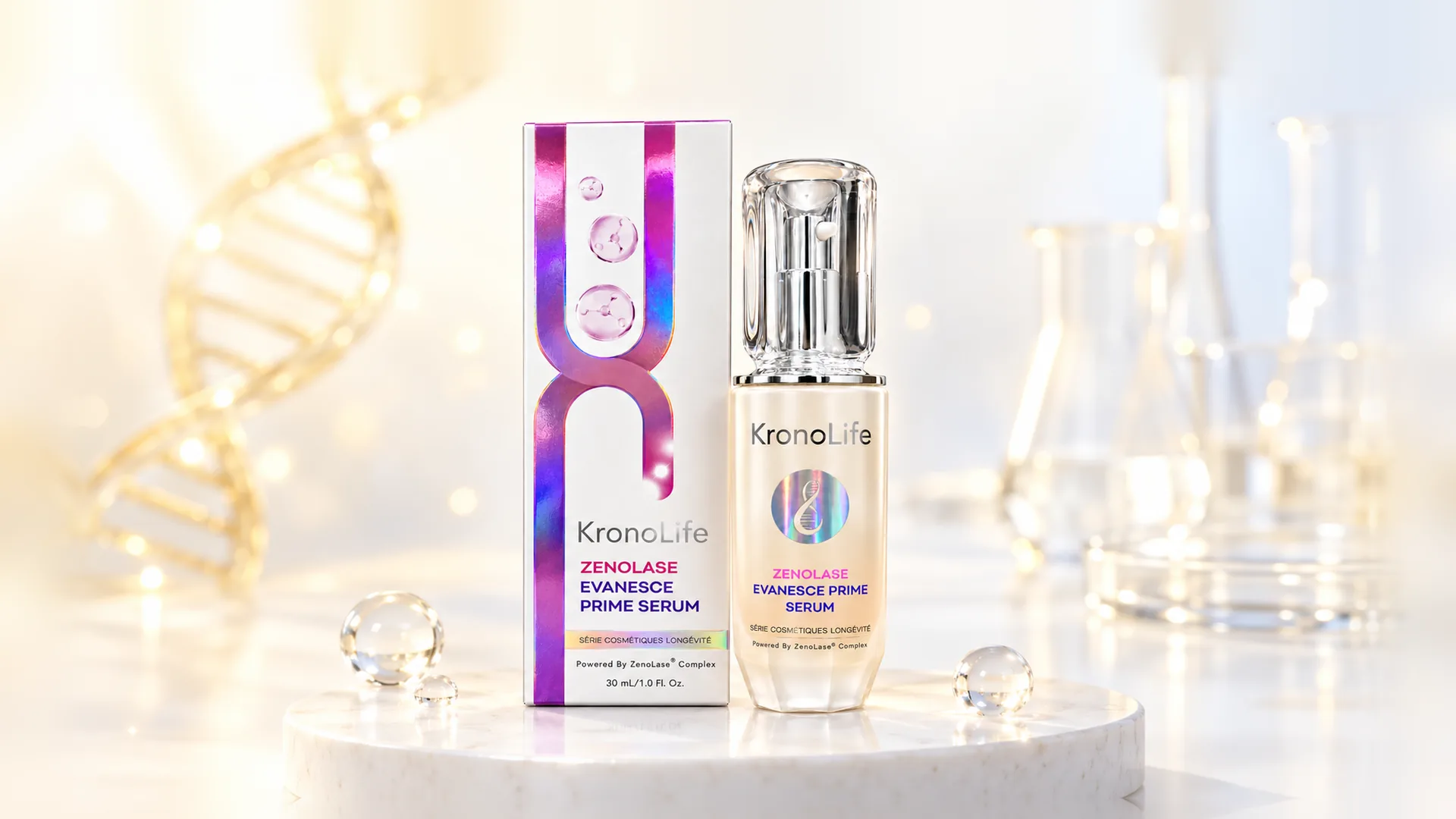
From Lab to Paris: Building and Testing the ZenoLase Senolytic Serum
A case study for brands and ingredient buyers. How a patent-pending senolytic active moved from aged human skin cells to ex vivo human skin, a finished serum, clinical use testing and a Top 3 place at Cosmetic Victories 2023 in Paris.
Read the articleSenolytics, Senomorphics and Geroprotectors: A Formulator's Guide
Three classes of longevity actives act on aging biology in different ways. This guide explains how each works, what changes when research drugs become consumer products, and how to choose a class for a brief.
Read the article
Senescent Cells in Skin Aging: What R&D Teams Need to Know
Cellular senescence links UV, DNA damage and time to collagen loss, chronic inflammation and uneven pigment. This guide covers the biology, the human-skin evidence, and what it means for actives, endpoints and claims.
Read the article